The 'wholewheat' bread that isn't: what's actually in your Woolworths loaf
I turned over a loaf of Woolworths Tante Anna Wholewheat Brown Bread and the first ingredient wasn't wholewheat — it was white flour. Wholewheat came in sixth, at 6%. Here's what the ingredient panels on the sliced-bread shelf actually say, and how to read past the front of the pack.
Written by Amy Morris, BSc (Hons) Nutritional Therapy — Functional Nutritional Therapist
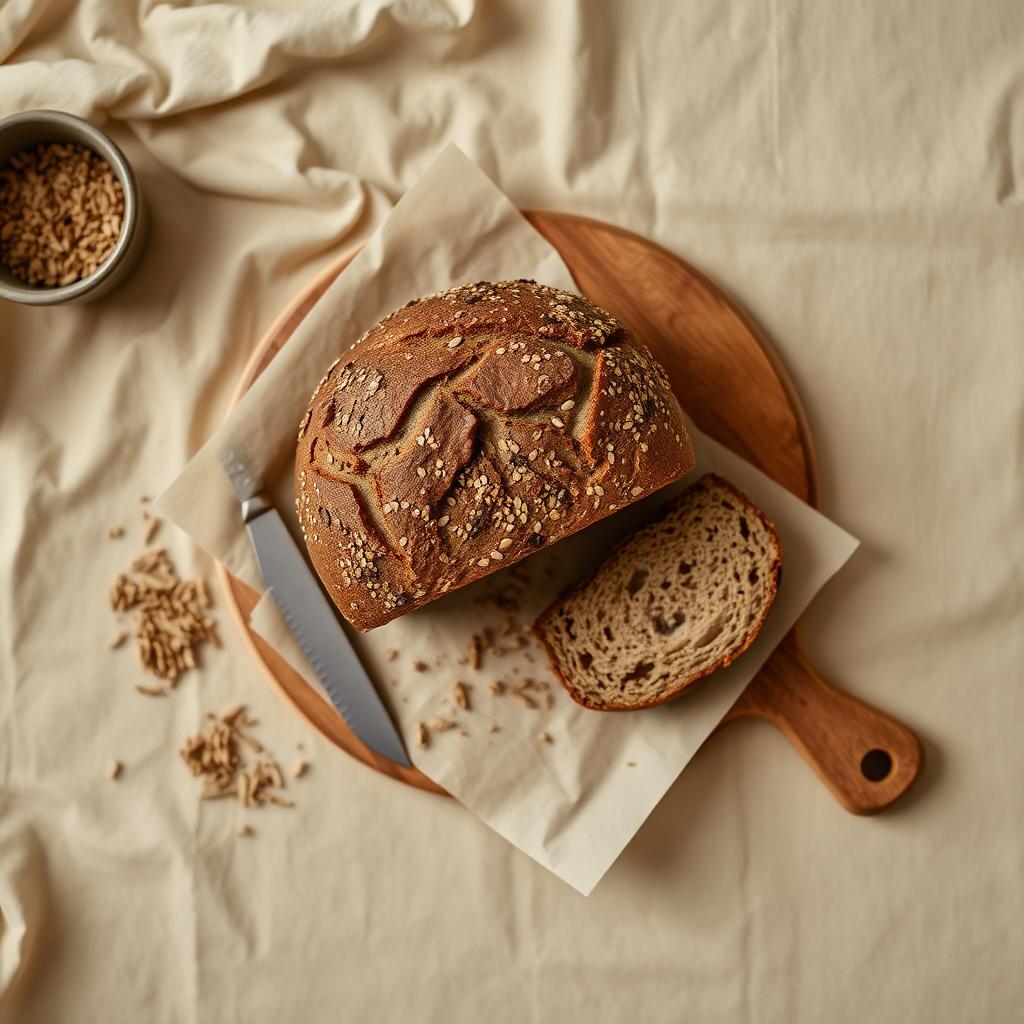
I picked up a loaf of Woolworths' Tante Anna Wholewheat Brown Bread the other day, turned it over out of habit — occupational hazard, I always read labels — and found something worth a proper look. The first ingredient wasn't wholewheat flour. It was white bread wheat flour. Wholewheat showed up sixth on the list, at 6%. So I went back to the shelf and photographed everything I could find. Here's what the ingredient panels actually say, and what it means for the loaf in your bread bin.
What 'wholewheat' is supposed to mean
Whole wheat flour contains all three parts of the wheat kernel — bran, germ and endosperm. That's where the fibre, B vitamins, minerals and slower-release carbohydrate come from. Refined white flour has the bran and germ stripped out, leaving mostly endosperm. Same starting grain, very different nutritional package.
South Africa's food labelling regulation (R146) does define 'whole grain,' 'whole grain flour' and 'whole wheat' as specific terms — so a manufacturer can't just call anything wholewheat and walk away. But defined terms and consumer expectation are two different things, and this is exactly the gap these loaves are sitting in.
What I actually found on the shelf
Tante Anna Wholewheat Brown Bread (Woolworths Food, Gut Club range). Ingredients, in order: white bread wheat flour, water, wheat bran, crushed wheat (6%), wheat gluten, salt, acidity regulator, colourant, vegetable fat (palm fruit), preservative (calcium propionate), emulsifiers, flour improver, mineral salts, vitamins.
Read that ingredient list by weight — which is how SA labelling law requires it to be ordered — and this is a white loaf with wheat bran added back in, 6% crushed wheat for texture, and a colourant doing some of the visual work 'wholewheat' is meant to imply. The fibre number on the panel (6.2g/100g) looks respectable because bran has been sprinkled back in, but this is not a loaf that behaves like wholewheat in your body. It's a white-flour loaf, and white flour — stripped of its bran and germ — is one of the most reliable ways to spike both glucose and insulin. Repeated, day-after-day insulin spikes are exactly what drives insulin resistance, energy crashes, cravings and central weight gain over time. Calling it 'not a bad loaf' would be generous; it's a refined-carbohydrate loaf wearing a wholewheat jacket.
Woolworths Wholewheat Sourdough follows the same pattern: white bread wheat flour first, sourdough culture (20%, itself built on white flour), wholewheat bran (6%), crushed wheat (6%), then the usual gluten, oil, salt and improvers. White flour first, wholewheat content capped at 6%.
Thick Slice Brown Bread (Woolworths Our Bakery) is the interesting one. It's built on brown bread wheat flour as the first ingredient — a distinct SA milling category, closer to genuine wholegrain flour than white flour with bits added back. Worth knowing which one you're actually reaching for.
For the record, the Bran, Raisin & Sultana Muffins are where cake wheat flour actually turns up (second ingredient), not on the sliced-bread shelf. If your instinct was 'cake flour,' you weren't wrong — you'd just pointed at the wrong aisle.
Why this matters for your gut and your blood sugar
This isn't pedantry for its own sake. The whole reason someone reaches for a wholewheat loaf over a white one is the fibre and the slower glycaemic response — steadier blood sugar, less insulin, better satiety, more feeding for your gut bacteria. A loaf that's 88%+ white flour with a light dusting of bran back on top will behave much closer to white bread in your body than the label suggests: a sharp rise in blood glucose, a matching insulin surge to clear it, then the crash and cravings 90 minutes later. Do that twice a day, five days a week, and you're quietly training your body toward insulin resistance — the same pattern that sits underneath type 2 diabetes, PCOS, fatty liver and stubborn belly fat.
If you're managing blood sugar, working on gut health, or just trying to eat closer to whole foods, the ingredient list matters more than the front-of-pack name every single time. Front-of-pack is marketing. The ingredient list, in descending order by weight, is the only part of the pack that's legally required to tell you the truth.
Front-of-pack is marketing. The ingredient list — in descending order by weight — is the only part of the packet legally required to tell you the truth.
What to actually check before you buy
- Read past the name. 'Wholewheat,' 'brown,' 'seeded' and 'multigrain' are marketing terms, not nutrition guarantees.
- Check what's first on the ingredient list. First ingredient by weight is usually the majority ingredient — if it's a refined flour, the loaf is fundamentally a white loaf.
- Look for a percentage next to 'wholewheat' or 'wholegrain.' If there isn't one, that's information the brand chose not to give you.
- Don't rely on colour. Colourant and molasses can darken a loaf without adding a gram of bran.
- Fibre grams on the nutrition panel are a better proxy than the front label — but check where that fibre is coming from (added bran isn't the same as intact whole grain).
References
- Department of Health, Republic of South Africa. Regulations Relating to the Labelling and Advertising of Foodstuffs (R146 of 2010), Foodstuffs, Cosmetics and Disinfectants Act, 1972 (Act 54 of 1972).
- Aune D, Keum N, Giovannucci E, et al. Whole grain consumption and risk of cardiovascular disease, cancer, and all cause and cause specific mortality: systematic review and dose-response meta-analysis. BMJ. 2016;353:i2716.
- Reynolds A, Mann J, Cummings J, et al. Carbohydrate quality and human health: a series of systematic reviews and meta-analyses. Lancet. 2019;393(10170):434–445.
- Slavin JL. Whole grains and human health. Nutr Res Rev. 2004;17(1):99–110.
- Ludwig DS, Ebbeling CB. The carbohydrate-insulin model of obesity: beyond 'calories in, calories out'. JAMA Intern Med. 2018;178(8):1098–1103.
- Jenkins DJA, Wolever TMS, Taylor RH, et al. Glycemic index of foods: a physiological basis for carbohydrate exchange. Am J Clin Nutr. 1981;34(3):362–366.
The takeaway
Nothing here is illegal — R146 permits 'wholewheat' as a defined term, and none of these labels are lying outright. But there's a real gap between what a shopper assumes 'wholewheat' means at a glance and what a 6% inclusion rate actually delivers. If you want the fibre and blood sugar benefits you're shopping for, spend the extra ten seconds turning the pack over. The ingredient list will tell you the truth the front of the packet won't. (Ingredient lists documented from Woolworths Food packaging, Cape Town, July 2026 — formulations can change.)
Monthly newsletter
Liked this? Get the monthly note.
One email a month with new research made readable, plus practical nutrition and habit notes from the Kitchen Table.