Batch cooking without the Sunday burnout
A low-effort framework for prepping ingredients, not whole meals, so weeknight cooking feels almost effortless.
Written by Amy Morris, BSc (Hons) Nutritional Therapy — Functional Nutritional Therapist
Sunday batch cooking has a PR problem. Every food blog suggests cooking eight complete meals on Sunday so future-you can eat soggy Tupperware Tuesday for six days. No one wants that, and most people stop within three weeks. The trick is not to cook meals in advance — it's to prep components in advance and assemble fast on the night. This is the framework I use, the one I teach clients, and the one that has actually survived contact with real life.
Why most batch cooking fails
Pre-cooked meals get boring by Tuesday and unappetising by Thursday. The flavour and texture penalty for cooking and reheating most proteins and starches is real. Worse, when the week's plan is rigid ('Wednesday is lentil curry'), one schedule change collapses the whole system and the food goes to waste — which feels like failure and trains people to stop trying.
The component model decouples that. You're not pre-deciding meals, you're stocking high-friction ingredients ready to combine in whatever way Tuesday-you actually feels like.
The component framework
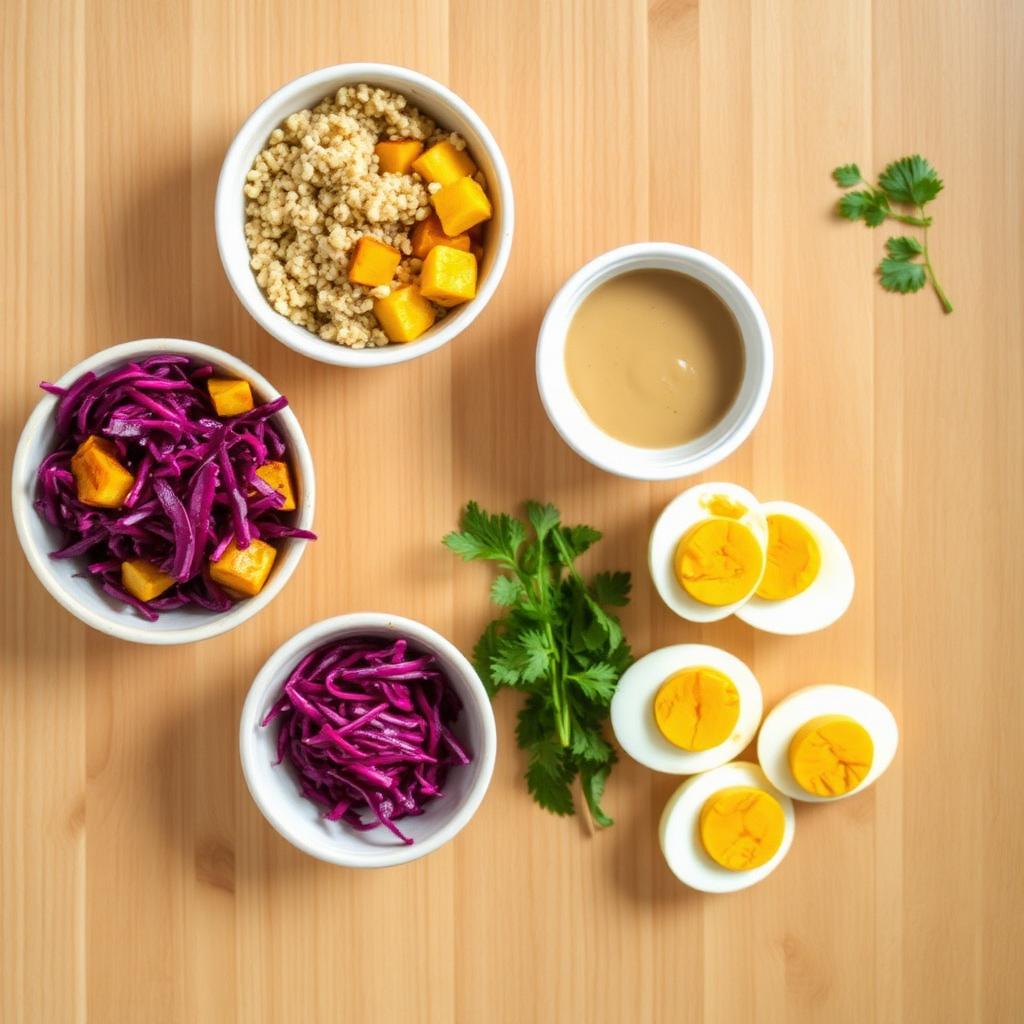
Every dinner is built from four components: a protein, a complex carb, two cooked vegetables, and a flavour vehicle (a sauce, dressing or condiment that makes it taste like a meal rather than a hospital tray). Prep two or three options in each category on a Sunday and the week assembles itself in 8 minutes per night.
What to actually prep on a Sunday (90 minutes max)
- Two proteins — e.g. tray of chicken thighs roasted with lemon and oregano; a pot of lentils cooked in stock with bay leaf.
- One whole grain — pot of quinoa, brown rice or farro, cooked and oiled to prevent clumping.
- Two roasted vegetables — half a tray of mixed root veg, half a tray of broccoli/cauliflower florets.
- One raw prep — washed salad leaves, sliced cucumber, grated carrot in lemon juice (keeps 4 days).
- Two sauces — tahini lemon dressing, and a basil/coriander/yoghurt green sauce. These are the secret to weeknight food not feeling like punishment.
- Hard-boiled eggs — 6 to 8. The fastest emergency protein in the fridge.
The 8-minute weeknight assembly
Tuesday at 7 p.m. you open the fridge tired. Pull a portion of grain into a bowl, microwave for 90 seconds. Add a portion of cold roasted vegetables. Slice some chicken on top. Spoon over the tahini sauce. Add a handful of raw salad and a squeeze of lemon. Done. It looks like a poke bowl, it cost £3, and it took eight minutes.
The nutrition logic underneath
Every assembled bowl hits the same targets I'd build into a clinic meal plan: 25–35 g protein, two fist-sized servings of vegetables, a complex carb portion sized to your activity, and a fat source. The blood-sugar response of a balanced bowl is roughly half that of a pasta-and-jar-sauce dinner with the same calorie content (Augustin et al., Nutr Metab Cardiovasc Dis 2015), and the fibre and polyphenol content is substantially higher.
Pre-prepped components also massively reduce the chance of a 7 p.m. takeaway. The Cornell research on convenience and consumption is unambiguous: the food that's easiest to reach wins (Wansink, Slim by Design, 2014). Make the healthy bowl the easiest option in your kitchen at the moment you're most tired.
Lunch is the other big win
Lunch is where most plans fall apart, because mid-morning you have no time and no decision-making capacity. Same components, different bowl. Tuesday's roasted veg + lentils + tahini + leftover roast chicken = a meal-prep lunch that took three minutes to pack.
What to absolutely not do
- Don't pre-cook leafy greens — they go grey and slimy. Wash and dry them; cook fresh in 90 seconds when needed.
- Don't pre-dress salads. Dressing on impact, never in advance.
- Don't prep more than 4 days at a time. Food safety and palatability both drop after that (FSA UK guidance on cooked food storage).
- Don't make all-new recipes on Sunday. Use formats you already know — energy goes to chopping and roasting, not learning.
The goal isn't a fridge full of perfect meals. It's a fridge that makes the easy weeknight dinner a healthy one.
References
- Augustin LS et al. Glycemic index, glycemic load and glycemic response: an International Scientific Consensus Summit. Nutr Metab Cardiovasc Dis 2015;25(9):795–815.
- Wansink B. Slim by Design: Mindless Eating Solutions for Everyday Life. William Morrow, 2014.
- Food Standards Agency (UK). Cooking and reheating food safely. FSA guidance, updated 2023.
- Ducrot P et al. Meal planning is associated with food variety, diet quality and body weight status in a large sample of French adults. Int J Behav Nutr Phys Act 2017;14:12.
- Mills S et al. Frequency of eating home cooked meals and potential benefits for diet and health. Int J Behav Nutr Phys Act 2017;14:109.
The takeaway
Prep components, not meals: two proteins, one grain, two roasted vegs, two sauces, hard-boiled eggs. 90 minutes on Sunday. 8 minutes on Tuesday. No burnout, no soggy Tupperware, no Wednesday takeaway.
Monthly newsletter
Liked this? Get the monthly note.
One email a month with new research made readable, plus practical nutrition and habit notes from the Kitchen Table.