Peptides: a functional medicine view of the pros, the cons and where microdosing fits
From BPC-157 to GLP-1s, peptides have gone from biohacker forums to high-street clinics in three short years. Here is the considered, functional-medicine take — what they actually do, who they help, where microdosing earns its place, and where self-dosing from the internet does not.
Written by Amy Morris, BSc (Hons) Nutritional Therapy — Functional Nutritional Therapist
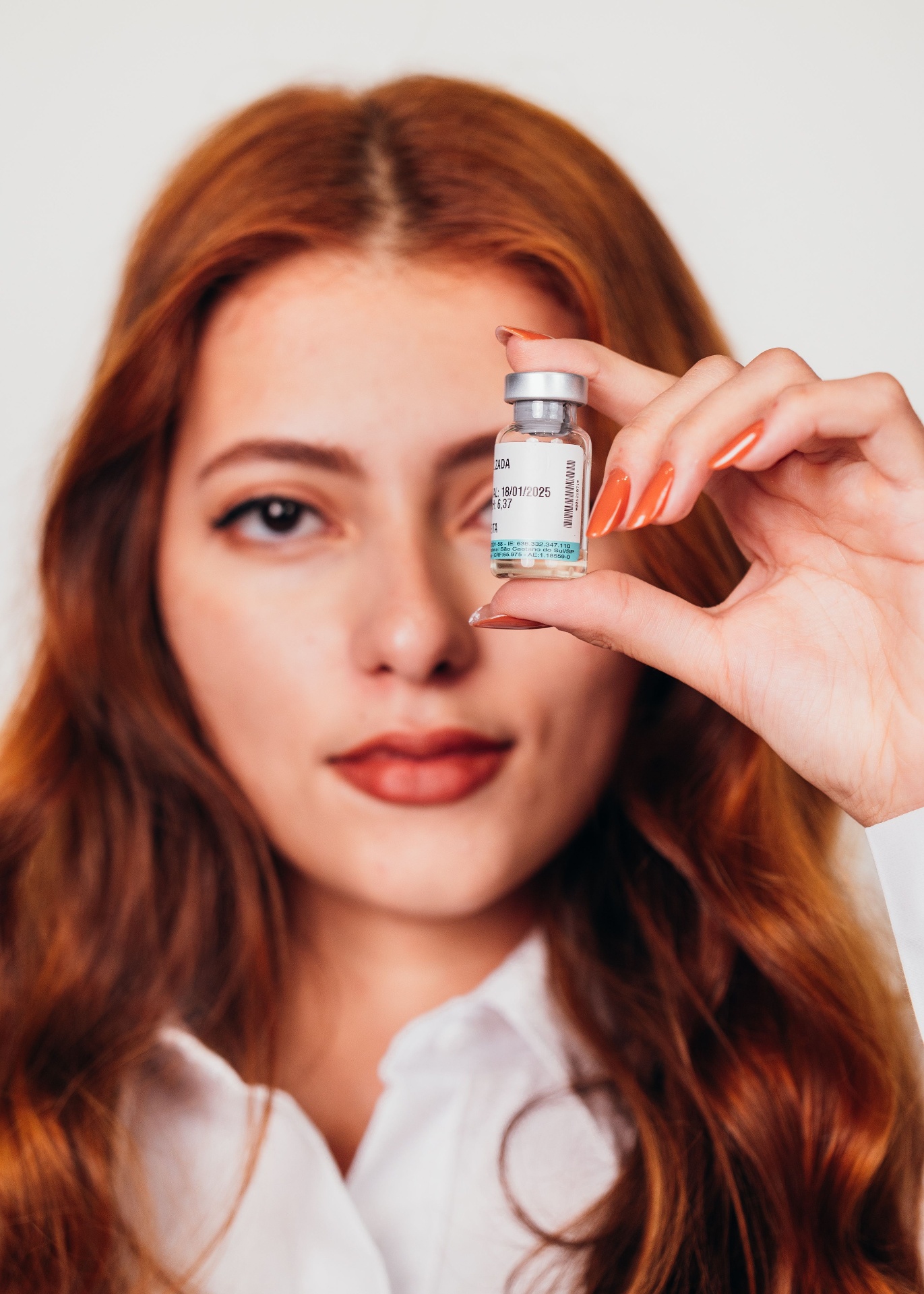
Peptides are everywhere right now — in wellness podcasts, in the back rooms of aesthetics clinics, in DM groups trading research-grade vials like sourdough starters. Some of the enthusiasm is justified: peptides really are a precise, elegant class of molecule with genuine therapeutic potential. Some of it is, frankly, marketing dressed up as science. Functional medicine sits squarely in the middle of that conversation, because our entire framework asks the same question before any tool is reached for: what is the system underneath actually asking for, and is this the right lever?
A short primer on what peptides actually are
Peptides are short chains of amino acids — smaller than proteins, larger than single amino acids, usually between two and around fifty residues long. The body manufactures thousands of them constantly, and they act as signalling molecules: tiny messages that tell cells when to repair, when to release a hormone, when to dampen inflammation, when to feel full. Insulin is a peptide. Oxytocin is a peptide. Glucagon-like peptide-1 (GLP-1), the hormone behind semaglutide and tirzepatide, is a peptide your gut makes after every meal.
Therapeutic peptides are synthetic versions of these natural signals, or close analogues of them. Because they bind to specific receptors rather than blanket-suppressing a system, they tend to be more targeted than traditional drugs — and, used properly, more forgiving. The pharmaceutical industry has known this for decades; what has changed is access. Compounding pharmacies and grey-market suppliers have made dozens of peptides available to consumers in a way that simply wasn't possible five years ago, which is both the opportunity and the problem.
The peptides people are actually asking about
A handful of peptides dominate the current conversation, and they're worth understanding on their own terms rather than as a single category.
- GLP-1 receptor agonists (semaglutide, tirzepatide, liraglutide) — licensed for type 2 diabetes and obesity. Reduce appetite, slow gastric emptying, improve insulin sensitivity, and, in trials, reduce cardiovascular events.
- BPC-157 — a synthetic fragment of a protein found in human gastric juice. Strong animal data for tendon, ligament and gut-lining repair; human data is limited but accumulating.
- TB-500 (thymosin beta-4) — supports tissue regeneration and vascular repair; popular in injury recovery.
- CJC-1295 and ipamorelin — growth-hormone-releasing peptides, often used together to nudge the pituitary rather than replace growth hormone directly.
- Thymosin alpha-1 — an immune-modulating peptide with a long licensed history for hepatitis B in several countries.
- Selank, semax — nootropic peptides developed in Russia, modest human data, mainly used for anxiety and cognition.
- PT-141 (bremelanotide) — licensed in the US for low sexual desire in pre-menopausal women.
The pros — used properly, they are genuinely useful
When peptides are chosen for the right person, dosed correctly and monitored, the upsides are real. Targeted receptor binding means fewer off-target effects than most pharmaceuticals. Short half-lives mean you can titrate quickly and stop quickly. And because they leverage signals the body already understands, the response often feels physiological rather than pharmacological — work-with-you rather than do-to-you.
- GLP-1s have transformed outcomes in type 2 diabetes and class II/III obesity, with downstream benefit for cardiovascular risk, fatty liver and chronic kidney disease.
- BPC-157 has a strong preclinical track record for stubborn tendinopathies, post-surgical gut healing and IBD-style inflammation.
- Growth-hormone-releasing peptides can support recovery, sleep architecture and body composition in carefully selected adults — particularly post-menopausal women losing muscle mass.
- Thymosin alpha-1 has a place in immune dysregulation, post-viral pictures and complex chronic infection cases.
- Across the board, peptides tend to be well-tolerated at therapeutic doses, with predictable, reversible side-effect profiles.
The cons — and they are not small
The downsides cluster into three categories: evidence, quality, and context. Outside the licensed GLP-1s, long-term human safety data for most peptides is thin. BPC-157, for example, has decades of compelling animal work and almost no large human trials. That doesn't make it dangerous; it makes it under-studied. Anyone telling you otherwise is selling something.
Quality control is the bigger problem. 'Research-grade' peptides bought online are unregulated, frequently misdosed, sometimes degraded, occasionally contaminated with bacterial endotoxin from poor reconstitution practice. The MHRA and FDA have repeatedly flagged compounded and grey-market peptides for purity and labelling failures. Pharmaceutical-grade product, dispensed by a licensed pharmacy on a prescription, is a different conversation entirely — and the only conversation a functional-medicine practitioner should be willing to have.
And then there is context. GLP-1s in particular can drive significant loss of lean muscle and bone density if protein intake (1.6–2.2 g/kg/day) and resistance training aren't prioritised — a problem the consumer marketing almost never mentions and one that becomes meaningful very quickly in women over 40. Rapid weight loss without muscle protection is not a win; it is sarcopenia with smaller jeans.
Peptides don't fix terrain — they push on it. If sleep, protein, nutrient status, training and stress haven't been addressed, a peptide is a borrowed signal, not a real change.
Where microdosing earns its place
Microdosing — using a fraction of the standard licensed dose, often one-fifth to one-tenth — is gaining serious clinical ground for GLP-1s in particular. The reasoning is sound. Many of the metabolic benefits of GLP-1 agonism (improved insulin sensitivity, reduced food noise, better satiety, lower inflammation) appear at doses well below those needed for dramatic weight loss. Lower doses dramatically reduce the rate-limiting side effects: nausea, fatigue, reflux, gallbladder issues, and the lean-mass loss noted above.
Used by a knowledgeable clinician, microdosing is a defensible, conservative strategy — particularly for perimenopausal women dealing with insulin resistance, stubborn central weight gain, or PCOS-driven metabolic chaos who don't need or want the full pharmacological dose. The same principle applies to BPC-157 (where lower, more frequent dosing often outperforms heroic single doses in clinical practice) and to growth-hormone-releasing peptides (where the goal is a gentle pulse, not a flood).
Done from a kit ordered online and reconstituted on a kitchen counter, microdosing is not a strategy. It is a gamble with an unknown product and no medical oversight. The intervention isn't the dose; it's the framework around the dose.
Where they fit for women — perimenopause, autoimmunity and recovery
Three pictures come up repeatedly in my clinic where peptides are worth considering as adjuncts. First, metabolic perimenopause — the woman in her mid-40s who has done everything 'right' and is still gaining weight, losing energy and watching her HbA1c creep up. A microdosed GLP-1 alongside resistance training, adequate protein and proper sleep often unlocks the picture in a way diet alone cannot.
Second, complex autoimmunity and gut repair — endometriosis, ulcerative colitis, post-infectious IBS, leaky-gut pictures with persistent inflammation. BPC-157, used short-term and orally or subcutaneously, is one of the most discussed adjuncts in this space, ideally layered onto an anti-inflammatory dietary protocol, targeted nutrient repletion and microbiome work.
Third, post-surgical or post-injury recovery in women who don't bounce back — particularly after hysterectomy, excision surgery for endometriosis, joint replacement or significant tendon injury. A short course of BPC-157 and TB-500 under clinical supervision can meaningfully shorten the tail of recovery in those who haven't responded to physiotherapy and nutrition alone.
Side effects and when to stop
Most peptide side effects are mild and transient and resolve within the first two to four weeks. Anything that doesn't settle by six weeks, or anything severe at any point — significant abdominal pain on a GLP-1, chest tightness, new mood changes, persistent injection-site reactions — is a reason to stop and reassess with the prescribing clinician, not to push through.
- GLP-1s — nausea, reflux, constipation, fatigue, gallbladder symptoms; rare pancreatitis. Lean-mass loss without resistance training.
- BPC-157 — generally well tolerated; occasional injection-site reactions, transient fatigue.
- CJC-1295 / ipamorelin — water retention, head fogginess, vivid dreams in the first weeks; usually settles.
- Thymosin alpha-1 — occasional flu-like response in the first few doses.
- PT-141 — flushing, transient nausea, blood pressure changes; not for anyone with cardiovascular disease.
Safety, medications and who should pause
Peptides are not inert and they are not for everyone. Always disclose every medication and supplement to the prescribing clinician, including hormonal contraception, antidepressants, thyroid medication, insulin, sulphonylureas, statins, antiepileptics, anticoagulants and any oncology drugs. GLP-1s in particular interact meaningfully with insulin and sulphonylureas (hypoglycaemia risk) and can alter the absorption of oral medications including thyroid replacement and the contraceptive pill.
Avoid peptides in pregnancy and breastfeeding unless specifically prescribed. Use significant caution in any history of pancreatitis, gallbladder disease, medullary thyroid cancer (a GLP-1 contraindication), active eating disorder, or untreated significant mental health concerns. Anyone with a current or recent cancer diagnosis should only consider peptides through their oncology team, not independently. If you are unsure, the answer is to ask first and dose second.
If you take prescription medication of any kind, check with your GP or a qualified healthcare practitioner before starting any peptide protocol — including 'just a microdose'. There is no such thing as a free signal.
My working framework
Foundations first — always. Sleep, protein, resistance training, blood sugar regulation, micronutrient status, gut function, nervous system load. These are the unsexy levers that move 80% of the outcome in 80% of clients, and no peptide compensates for them. Then targeted testing to understand what is actually dysregulated — full thyroid panel, fasting insulin, HOMA-IR, inflammatory markers, a proper hormone panel, often a stool test. Then, and only then, the question of whether a peptide is the right adjunct, with a clinician who can prescribe pharmaceutical-grade product, monitor markers, and adjust the dose. Anything else is a leap of faith dressed up as science.
References
- Briden L. Hormone Repair Manual: Every Woman's Guide to Healthy Hormones After 40. Macmillan, 2021.
- Brighten J. Is This Normal? HarperOne, 2023.
- Wilding JPH et al. Once-Weekly Semaglutide in Adults with Overweight or Obesity (STEP 1). N Engl J Med 2021;384:989–1002.
- Jastreboff AM et al. Tirzepatide Once Weekly for the Treatment of Obesity (SURMOUNT-1). N Engl J Med 2022;387:205–216.
- Lincoff AM et al. Semaglutide and Cardiovascular Outcomes in Obesity without Diabetes (SELECT). N Engl J Med 2023;389:2221–2232.
- Sikiric P et al. Stable Gastric Pentadecapeptide BPC 157: novel therapy in gastrointestinal tract. Curr Pharm Des 2011;17(16):1612–1632.
- Sikiric P et al. Brain-gut axis and pentadecapeptide BPC 157. Curr Neuropharmacol 2016;14(8):857–865.
- Goldstein AL, Hannappel E, Kleinman HK. Thymosin beta-4: actin-sequestering protein moonlights to repair injured tissues. Trends Mol Med 2005;11(9):421–429.
- Goldstein AL. From lab to bedside: emerging clinical applications of thymosin alpha 1. Expert Opin Biol Ther 2009;9(5):593–608.
- Sigalos JT, Pastuszak AW. The safety and efficacy of growth hormone secretagogues. Sex Med Rev 2018;6(1):45–53.
- Wilson VG. Growth hormone and weight loss: a review. Endocr Pract 2014;20(8):885–895.
- Conde-Frieboes K et al. Glucagon-like peptide-1 receptor agonists and lean mass: clinical implications. Diabetes Obes Metab 2023;25(2):301–311.
- FDA Drug Safety Communication: risks associated with compounded GLP-1 products, 2024.
- MHRA. Safety information for unlicensed and compounded peptide products, 2024.
- Clayton AH et al. Bremelanotide for female sexual dysfunctions in pre-menopausal women: RECONNECT studies. Obstet Gynecol 2019;134(5):909–917.
- NICE TA875 — Semaglutide for managing overweight and obesity. 2023.
The takeaway
Peptides are precise, powerful signalling tools — and most of their reputation problem comes from being used as shortcuts rather than adjuncts. Foundations first, pharmaceutical-grade product only, clinical oversight always. Used that way, microdosing in particular earns its place; used the other way, you're paying to find out things we already know.
Monthly newsletter
Liked this? Get the monthly note.
One email a month with new research made readable, plus practical nutrition and habit notes from the Kitchen Table.