The gut–brain axis: why your mood lives in your microbiome
Anxiety, low mood and brain fog are rarely just 'in your head'. A functional-medicine look at the gut–brain axis, why women feel it more sharply across the cycle, and what actually helps.
Written by Amy Morris, BSc (Hons) Nutritional Therapy — Functional Nutritional Therapist
If you've ever felt anxious for no reason after a week of bad eating, foggy in the days before your period, or noticeably calmer after a fortnight of cooking properly at home, you've already met the gut–brain axis. It is one of the most active areas of medical research right now — and one of the most under-used levers in everyday mental health.
What the gut–brain axis actually is
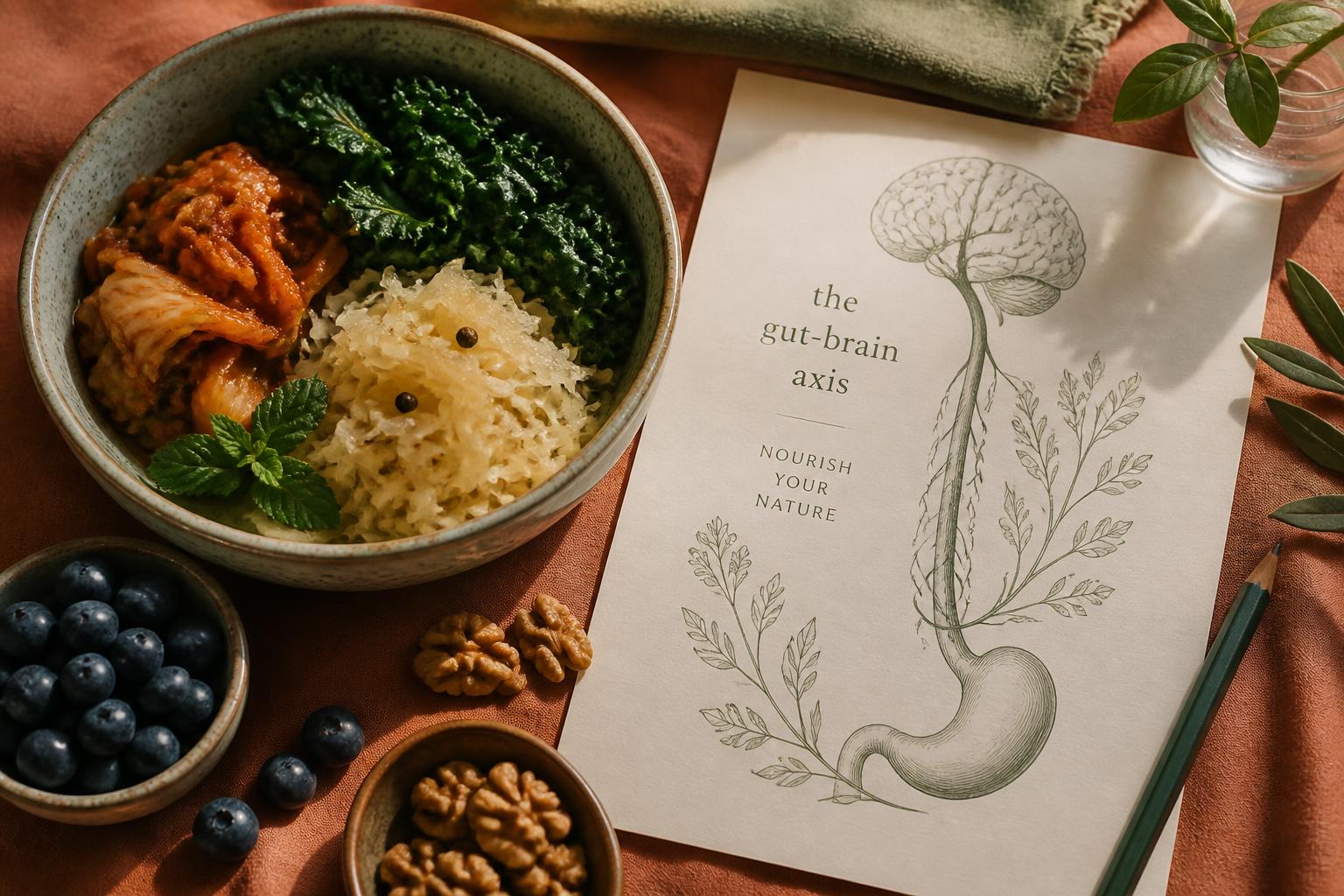
The gut–brain axis is the two-way conversation between your central nervous system and your enteric nervous system — the dense network of around 500 million neurons lining the gut, often called the 'second brain'. They talk to each other constantly via the vagus nerve, the immune system, circulating hormones, and a stream of chemical messengers made by the microbes living in your colon.
Around 90% of the body's serotonin and roughly half of its dopamine precursors are produced in the gut, not the brain. Gut bacteria also manufacture GABA, short-chain fatty acids like butyrate, and B vitamins that the brain depends on for mood regulation, focus and stress tolerance. When the microbiome is diverse and the gut lining is intact, that chemistry runs smoothly. When it isn't, the nervous system feels it first.
You don't have a gut and a brain. You have one continuous system that happens to fold in the middle.
How a struggling gut shows up as a struggling mind
Functional medicine looks for the upstream drivers of symptoms rather than the symptoms themselves. When someone walks in with anxiety, low mood, irritability or brain fog, gut health is almost always part of the work-up — alongside thyroid, iron, blood sugar and hormones. The mechanisms are now well described in the research literature, not fringe.
- Low microbial diversity is consistently associated with depression and anxiety in human studies (Valles-Colomer et al., Nature Microbiology 2019).
- Increased intestinal permeability ('leaky gut') allows bacterial lipopolysaccharide (LPS) into circulation, which drives neuroinflammation and is elevated in major depression (Maes et al., Neuro Endocrinol Lett 2008).
- Short-chain fatty acids made by fibre-fermenting bacteria, especially butyrate, support the blood–brain barrier and have direct antidepressant-like effects in trials.
- Vagal tone — measurable as heart rate variability — modulates how loudly gut signals reach the brain. Chronic stress lowers it; breathwork, cold exposure and singing raise it.
- Specific strains (Lactobacillus rhamnosus, Bifidobacterium longum, Lactobacillus helveticus) have been shown in randomised trials to lower perceived stress and cortisol output.
Why women feel this more sharply
Men and women share the same gut–brain wiring, but women have an extra layer of complexity: a cyclical hormonal environment that interacts with both the microbiome and the brain. Oestrogen and progesterone shift across the month, and so do gut motility, microbial composition, mood, sleep and stress reactivity.
Oestrogen, in particular, is metabolised through the gut via a collection of bacterial genes called the estrobolome (Plottel & Blaser, Cell Host Microbe 2011). When the microbiome is healthy, oestrogen is conjugated by the liver, sent to the gut, and excreted cleanly. When the microbiome is imbalanced — too much beta-glucuronidase activity, not enough fibre-fermenting species — oestrogen is reactivated and recirculated. This contributes to oestrogen-dominant PMS, PMDD and the heavy, anxious, weepy luteal phase so many women know intimately.
Progesterone, the other half of the cycle, acts on GABA receptors in the brain. When it drops in the days before a bleed, GABA tone falls with it — and women whose guts are already inflamed, whose blood sugar is unstable, or whose stress load is high, feel that drop as anxiety, insomnia and irritability rather than as a quiet wind-down.
The cyclical pattern most women miss
If you track your symptoms for two or three cycles, a pattern usually appears. Mood, gut function and food cravings track the hormonal phases in remarkably predictable ways. Knowing which phase you're in turns 'I'm a mess' into 'this is day 24, and this is what day 24 needs'.
- Menstrual phase (days 1–5). Prostaglandins drive cramping and looser stools. Iron loss starts. Energy and motivation are naturally lower — this is rest, not laziness.
- Follicular phase (days 6–13). Rising oestrogen lifts serotonin and dopamine sensitivity. Gut motility is steadier. Mood, focus and stress tolerance are usually at their best.
- Ovulatory phase (days 14–16). Peak oestrogen, briefly peak testosterone. Confidence, libido and social ease tend to be highest. Some women notice mid-cycle bloating.
- Luteal phase (days 17–28). Progesterone rises and then falls. Gut motility slows, constipation is more common, blood sugar is more reactive, and GABA tone drops in the final days. This is when anxiety, low mood, sugar cravings and 'why does everything feel hard' tend to peak.
Women don't have mood swings. They have a hormonal cycle that the rest of the world has largely refused to schedule around.
Where men fit in
Men don't ride a monthly hormonal wave, but their gut–brain axis is just as active. Testosterone, dopamine and the stress response are all influenced by microbiome composition. Low diversity, low fibre intake, heavy alcohol use and poor sleep are some of the strongest predictors of depressive symptoms and low motivation in men in the available literature.
Men also tend to under-report mental health symptoms and over-rely on stimulants — caffeine, nicotine, intense training — to mask what is often a gut, sleep and blood-sugar problem. The same foundations that work for women work for men: fibre diversity, fermented foods, blood-sugar stability, alcohol reduction, sleep, and vagal-tone work. The dosing is just steadier rather than cyclical.
Untangling what is causing what
The hardest part of gut–brain work isn't the protocol — it's working out whether the gut is driving the mood, the mood is driving the gut, or hormones are driving both. A few simple questions usually point clearly in one direction.
- Do symptoms track your cycle? If anxiety, low mood or IBS-type symptoms reliably appear in the second half of the cycle and lift on day 2 or 3 of bleeding, hormones are leading.
- Do symptoms track meals? Bloating, brain fog or low mood within 1–3 hours of eating points at blood sugar, food sensitivities or microbial imbalance.
- Do symptoms track sleep and stress? Worse after broken nights or stressful weeks suggests vagal tone, HPA-axis dysregulation and cortisol are dominant.
- Did symptoms start after antibiotics, gastro illness, the pill, hormonal IUD removal, or a stressful life event? Each of these alters the microbiome and is a clue to where to begin.
What actually helps — the functional-medicine foundations
Gut–brain work isn't glamorous. It's a small set of unsexy habits done consistently for long enough to change microbial composition, which takes around 6 to 12 weeks. These are the foundations every protocol in this space is built on.
- Aim for 30 different plant foods a week. Diversity of fibre feeds diversity of bacteria (Tim Spector's ZOE PREDICT data is unambiguous on this).
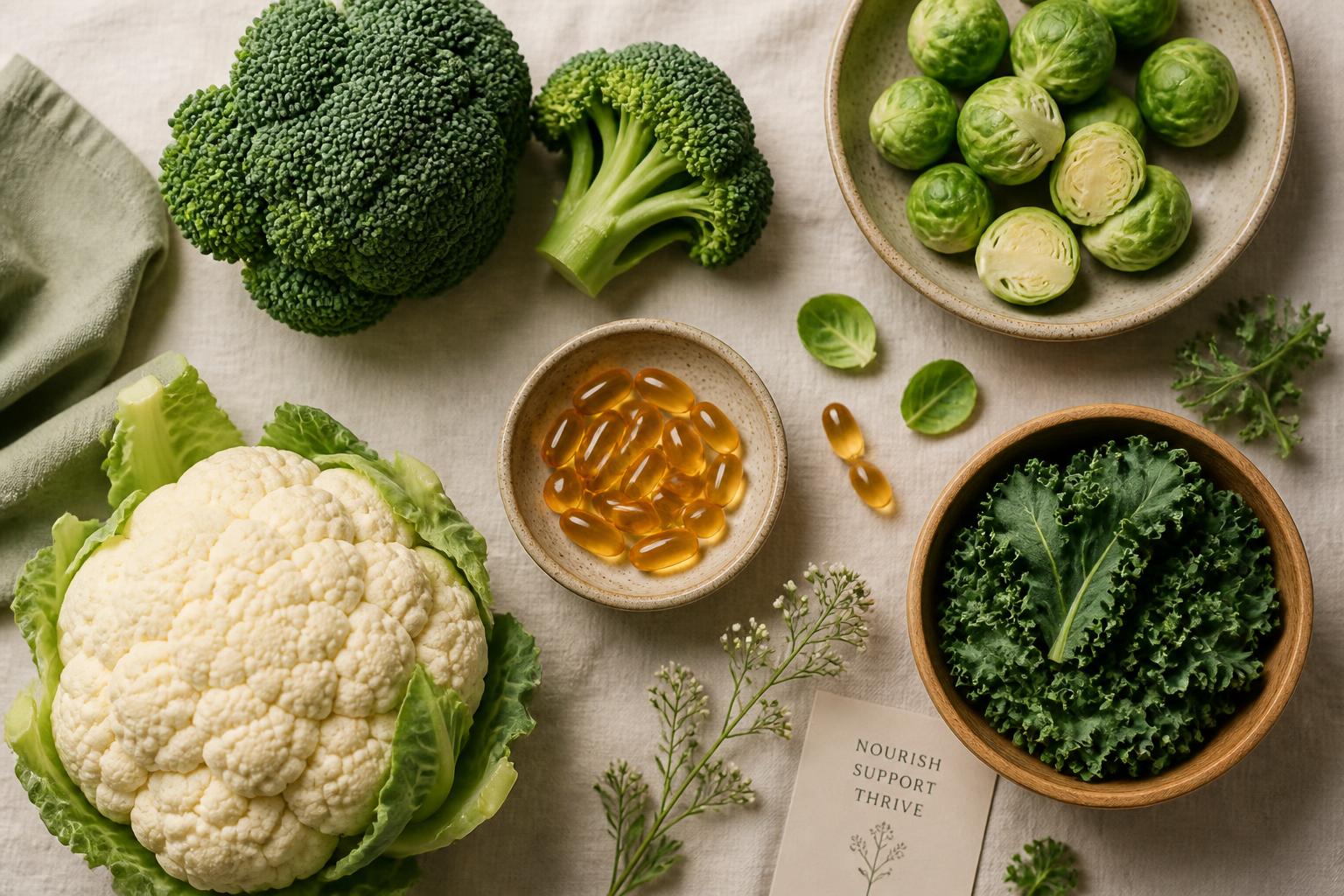
- 30g of fibre daily, weighted toward soluble fibre (oats, ground flax, chia, cooked-and-cooled potatoes, lentils, beans, berries, apples with skin).
- A small daily portion of fermented food — kefir, live yoghurt, sauerkraut, kimchi, miso. Three to four tablespoons is enough.
- Protein at every meal (around 30g) to stabilise blood sugar, which steadies mood and cravings — particularly in the luteal phase.
- Omega-3s from oily fish 2–3 times weekly, or a quality EPA/DHA supplement. Lower EPA:DHA ratios are linked to higher depression rates.
- Reduce alcohol meaningfully. Even moderate intake disrupts the microbiome and worsens luteal-phase symptoms.
- Daily light and movement — morning daylight anchors circadian rhythm, which the microbiome runs on its own version of.
- Vagal tone practice: slow nasal breathing, humming, singing, cold water on the face, unhurried meals.
Targeted support when foundations aren't enough
When the foundations are in place and symptoms persist, this is where functional-medicine testing and targeted supplementation earn their keep. A comprehensive stool test (GI-MAP, GI-Effects or similar) can identify dysbiosis, low keystone species, parasites, low pancreatic elastase, raised beta-glucuronidase or markers of inflammation. From there, the work is specific.
- Psychobiotic strains with human trial data: Lactobacillus rhamnosus JB-1, Lactobacillus helveticus R0052 + Bifidobacterium longum R0175, Bifidobacterium longum 1714.
- Saccharomyces boulardii after antibiotics or gastro illness.
- L-glutamine, zinc carnosine and slippery elm for gut-lining repair in confirmed permeability.
- Magnesium glycinate or bisglycinate in the evening — supports GABA, sleep and bowel motility.
- B vitamins (especially methylated B6, B12 and folate) for neurotransmitter synthesis.
- Calcium-d-glucarate and DIM in oestrogen-dominant patterns where the cycle is clearly driving mood (see the separate post on these two).
- Adaptogens like rhodiola or ashwagandha for HPA-axis support — context-dependent and best chosen with a practitioner.
Supplements are 10% of the work. Food, sleep, daylight, breath and how you treat your nervous system are the other 90%.
When to ask for more help
Gut–brain work is powerful, but it isn't a substitute for mental health care. If you're experiencing persistent low mood, panic, intrusive thoughts, disordered eating, or any thoughts of self-harm, please speak to your GP, a psychiatrist or a qualified mental health practitioner. The best outcomes happen when nutrition, gut work and psychological care run side by side — not in competition.
Equally, if you take antidepressants, mood stabilisers, contraception, thyroid medication, or any other prescription, always check with your prescriber before adding probiotics, adaptogens or higher-dose supplements. The interactions are usually mild but they exist, and a five-minute conversation prevents a six-week tangle.
References
- Valles-Colomer M et al. The neuroactive potential of the human gut microbiota in quality of life and depression. Nature Microbiology 2019;4(4):623–632.
- Cryan JF et al. The microbiota-gut-brain axis. Physiol Rev 2019;99(4):1877–2013.
- Foster JA, Neufeld KAM. Gut-brain axis: how the microbiome influences anxiety and depression. Trends Neurosci 2013;36(5):305–312.
- Messaoudi M et al. Beneficial psychological effects of a probiotic formulation (Lactobacillus helveticus R0052 and Bifidobacterium longum R0175) in healthy human volunteers. Gut Microbes 2011;2(4):256–261.
- Bravo JA et al. Ingestion of Lactobacillus strain regulates emotional behavior and central GABA receptor expression via the vagus nerve. PNAS 2011;108(38):16050–16055.
- Allen AP et al. Bifidobacterium longum 1714 as a translational psychobiotic. Transl Psychiatry 2016;6(11):e939.
- Maes M et al. The gut-brain barrier in major depression: intestinal mucosal dysfunction with an increased translocation of LPS. Neuro Endocrinol Lett 2008;29(1):117–124.
- Plottel CS, Blaser MJ. Microbiome and malignancy — the estrobolome. Cell Host Microbe 2011;10(4):324–335.
- Baker JM et al. Estrogen-gut microbiome axis: physiological and clinical implications. Maturitas 2017;103:45–53.
- Asher GN, Gerkin J, Gaynes BN. Complementary therapies for mental health disorders. Med Clin North Am 2017;101(5):847–864.
- Spector T. Food for Life. Jonathan Cape, 2022.
- Mayer EA. The Mind-Gut Connection. Harper Wave, 2016.
- Briden L. Hormone Repair Manual. Macmillan, 2021.
- Brighten J. Is This Normal? HarperOne, 2023.
- NICE NG222 — Depression in adults: treatment and management. 2022.
The takeaway
Your gut and your brain are one system having one conversation, and women hear it in cyclical stereo. Feed the microbiome, steady blood sugar, protect sleep, track your cycle for two months, and treat your nervous system as part of the protocol — not an afterthought. The mood you've been blaming yourself for is often a signal, not a flaw.
Monthly newsletter
Liked this? Get the monthly note.
One email a month with new research made readable, plus practical nutrition and habit notes from the Kitchen Table.