Hormones and mental health: from PMS to perimenopause, the conversation women aren't being offered
Progesterone, estradiol and testosterone all act on the brain. Here's what the evidence does — and doesn't — show about hormonal change, mood and body-identical hormone therapy, from PMS and the postnatal period to perimenopause.
Written by Amy Morris, BSc (Hons) Nutritional Therapy — Functional Nutritional Therapist

Women are often told that their low mood, anxiety or rage is 'just stress', 'just your age' or 'just how you are'. Sometimes it is stress. But for many women there is a pattern that nobody has pointed out to them: the hard seasons line up with hormonal change. The week before a period. The months after a baby. The years of perimenopause. Living with a hormone-driven condition like endometriosis. This isn't a fringe idea — sex hormones are brain chemicals as much as reproductive ones. What is missing is the conversation. This article is my attempt to start it carefully: what we know, what we don't, and how to raise it with someone who can help.
Your hormones are brain chemicals too
Estradiol, the main oestrogen of the reproductive years, influences serotonin, dopamine and a growth factor called BDNF that supports how brain cells connect and adapt. Progesterone is converted into allopregnanolone, which acts on the same calming GABA receptors targeted by some sedative medications. Testosterone also has receptors throughout the female brain. Researchers increasingly describe the brain as a major target organ for these hormones (Del Río et al., 2018).
The important nuance is that mood problems are rarely about a single number being low. For many women it is the change — the fall, the fluctuation, the withdrawal — and their individual sensitivity to it that matters. Two women with identical blood results can feel completely different. That is one reason a single hormone test often can't explain mood, and why symptom patterns tracked over time are so valuable.
It is often not the hormone level that matters most, but how quickly it changes and how sensitive your brain is to that change.
The windows of vulnerability
Across a woman's life there are predictable windows when hormones shift sharply — and research suggests mood risk tends to rise in several of them.
- PMS and PMDD: symptoms cluster in the luteal phase, and experiments show that some women's brains react differently to normal hormonal change (Schmidt et al., 1998). I've written a separate guide to PMDD diagnosis.
- The postnatal period: in an experiment that simulated pregnancy-level hormones and then withdrew them, women with a history of postnatal depression developed mood symptoms while women without that history did not (Bloch et al., 2000). The first medicines licensed specifically for postnatal depression, brexanolone and zuranolone, work on the allopregnanolone pathway (Meltzer-Brody et al., 2018).
- Endometriosis: a large Swedish cohort found higher rates of depression and anxiety in women with endometriosis (Gao et al., 2020), and genetic work suggests some shared biology rather than pain alone (Koller et al., 2023).
- Perimenopause: women without any previous depression were more likely to develop depressed mood during the menopause transition, linked to hormonal variability (Freeman et al., 2006), and the long-running SWAN study found major depression was more likely during and shortly after the transition than before it (Bromberger et al., 2011).
- Menopause and beyond: the picture is more mixed after the transition settles, which matters when we come to treatment.
Why this link is under-discussed
Part of it is structural. Gynaecology looks after the womb and ovaries; psychiatry looks after the mind; general practice has ten minutes to cover both. A woman who presents with low mood is usually asked about her life and her history of depression — less often about where she is in her cycle, whether she has recently had a baby, or whether her periods have started changing.
Part of it is training and culture. Menopause care has historically had a low profile in medical education, and many women describe being offered an antidepressant before anyone mentions perimenopause. In the UK, NICE guidance on menopause actually says to consider HRT to alleviate low mood arising from the menopause, and to explain that there is no clear evidence that SSRIs or SNRIs ease low mood in menopausal women who have not been diagnosed with depression (NICE, NG23). That guidance isn't always reflected in what women experience.
None of this means antidepressants are wrong. For many women they are effective and important, and depression in midlife is still depression. It means the hormonal question deserves to be asked.
What the evidence does and doesn't show about body-identical hormones and mood
Here is where I want to be most careful, because this area attracts big promises. The strongest evidence is in perimenopause. In a randomised trial, transdermal estradiol led to remission of depression in a meaningful proportion of perimenopausal women compared with placebo (Soares et al., 2001). Another trial found that women with past perimenopausal depression who were switched from estradiol to placebo were more likely to see depressive symptoms return (Schmidt et al., 2015). And a prevention trial found that transdermal estradiol with intermittent micronised progesterone reduced the development of clinically significant depressive symptoms in perimenopausal women (Gordon et al., 2018).
Expert guidelines summarise this as: estrogen appears to have antidepressant effects in perimenopausal women, but the evidence does not support it for depression after menopause, and it isn't licensed as an antidepressant (Maki et al., 2018). For testosterone, the international consensus is that the only evidence-based indication in women is low sexual desire causing distress; evidence for mood benefit is not established (Davis et al., 2019; Islam et al., 2019).
Progesterone is the most individual of all. Micronised progesterone helps some women sleep and feel calmer; others feel low, flat or anxious on progesterone or synthetic progestogens. If you need womb protection with estrogen, this is worth discussing openly so the type, dose and route can be adjusted.
When I say body-identical, I mean regulated hormones that are molecularly identical to our own — such as transdermal estradiol and micronised progesterone — prescribed and monitored by a qualified practitioner. That is different from unregulated compounded products, which UK menopause specialists do not recommend.
Body-identical hormone therapy is a conversation worth having, not a proven treatment for depression or a way to prevent suicide. It does not replace psychiatric care — for many women the right plan includes both.
Nutrition and lifestyle for a hormonally sensitive brain
None of these replace treatment, but they make the ground more fertile for whatever plan you and your practitioner choose.
- Eat for steady blood sugar: protein, fibre and healthy fats at every meal, especially in the luteal phase and during perimenopause, when sleep disruption makes cravings louder.
- Lean towards a Mediterranean-style pattern. In the SMILES trial, adults with depression who were supported to improve their diet had greater improvement than those given social support alone (Jacka et al., 2017). It was a small trial, but an encouraging one.
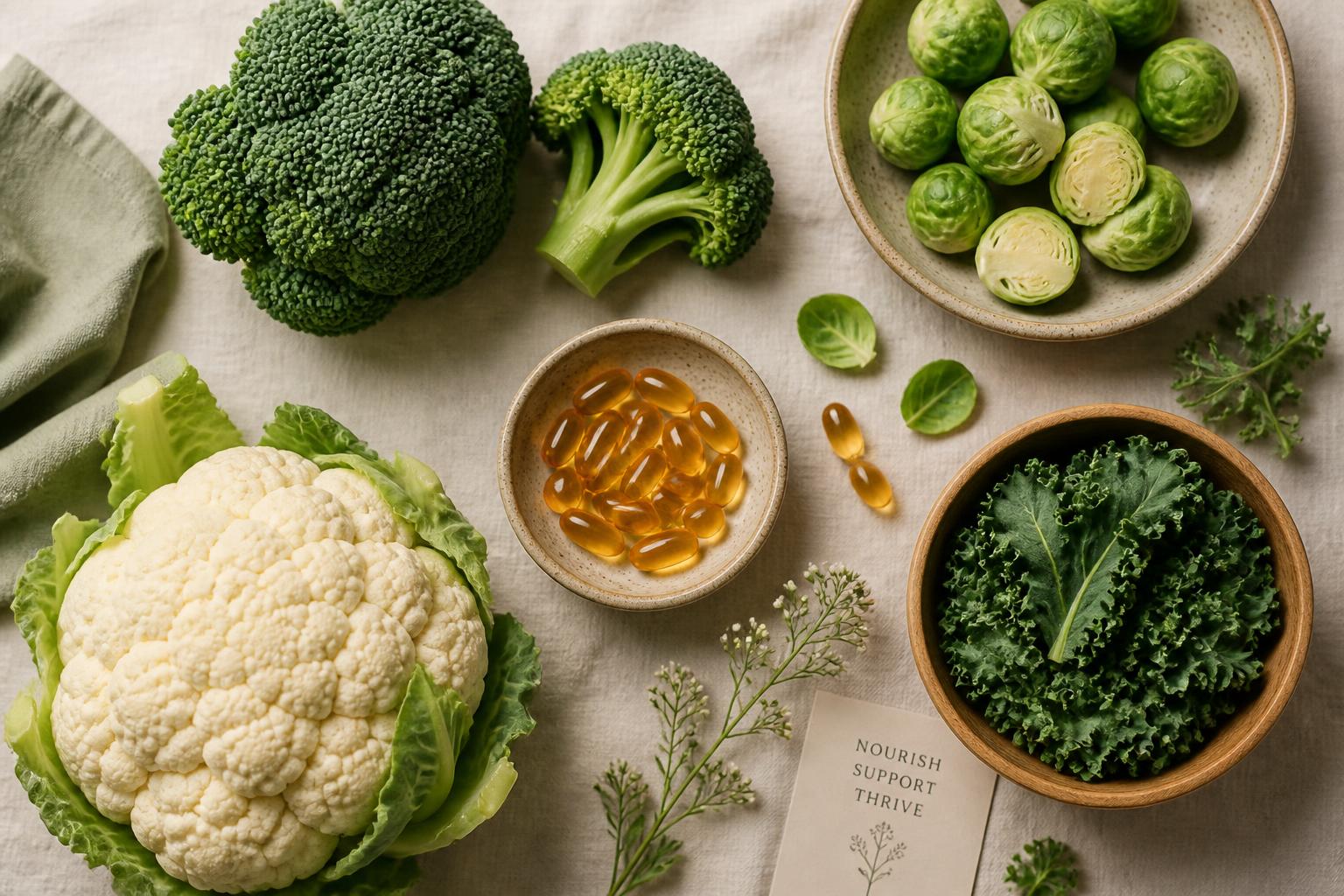
- Include oily fish or consider omega-3. A meta-analysis found EPA-predominant formulas may help depressive symptoms, though results vary (Liao et al., 2019).
- Move most days. Physical activity has broad evidence for reducing symptoms of depression and anxiety (Singh et al., 2023).
- Protect sleep, and be honest about alcohol. It worsens sleep, night sweats and next-day anxiety for many women.
- Test, don't guess: ferritin, B12, folate, vitamin D, thyroid function and, where relevant, iron and blood sugar markers. These can all affect mood and energy and are easy to correct.
Questions to take to your practitioner
- Do my symptoms follow my cycle, a pregnancy or birth, or changes in my periods?
- Could perimenopause be part of this, even though I'm still having periods?
- What are the options — therapy, antidepressants, hormonal treatment, or a combination — and what are the risks and benefits of each for me?
- If we try hormone therapy, how will we measure whether it's helping my mood, and when will we review it?
- Who else should be involved — a GP with menopause training, a gynaecologist, a psychiatrist?
If you need support now
If you are having thoughts of harming yourself or ending your life, please reach out now: in the UK call Samaritans on 116 123 (free, 24/7); in South Africa call the SADAG suicide crisis line on 0800 567 567; or contact your local emergency services. You deserve support today, not after the next appointment.
Before you act on any of this
This article is for education and general information only. It isn't medical advice, it can't diagnose or treat any condition, and it doesn't replace a consultation with your own doctor or a qualified practitioner who knows your history. Please don't start, stop or change any medication, hormone or supplement because of something you've read here — take your questions to the person responsible for your care.
Hormone therapy has individual risks and benefits that depend on your age, history and family history. It should only be started, changed or stopped with a qualified practitioner — as should any antidepressant or other psychiatric medication.
References
- Bloch, M., Schmidt, P.J., Danaceau, M., Murphy, J., Nieman, L., & Rubinow, D.R. (2000). Effects of gonadal steroids in women with a history of postpartum depression. American Journal of Psychiatry, 157(6), 924–930.
- Bromberger, J.T., Kravitz, H.M., Chang, Y.F., et al. (2011). Major depression during and after the menopausal transition: Study of Women's Health Across the Nation (SWAN). Psychological Medicine, 41(9), 1879–1888.
- Davis, S.R., Baber, R., Panay, N., et al. (2019). Global consensus position statement on the use of testosterone therapy for women. Journal of Clinical Endocrinology & Metabolism, 104(10), 4660–4666.
- Del Río, J.P., Alliende, M.I., Molina, N., et al. (2018). Steroid hormones and their action in women's brains: the importance of hormonal balance. Frontiers in Public Health, 6, 141.
- Freeman, E.W., Sammel, M.D., Lin, H., & Nelson, D.B. (2006). Associations of hormones and menopausal status with depressed mood in women with no history of depression. Archives of General Psychiatry, 63(4), 375–382.
- Gao, M., Koupil, I., Sjöqvist, H., et al. (2020). Psychiatric comorbidity among women with endometriosis: nationwide cohort study in Sweden. American Journal of Obstetrics and Gynecology, 223(3), 415.e1–415.e16.
- Gordon, J.L., Rubinow, D.R., Eisenlohr-Moul, T.A., et al. (2018). Efficacy of transdermal estradiol and micronized progesterone in the prevention of depressive symptoms in the menopause transition: a randomized clinical trial. JAMA Psychiatry, 75(2), 149–157.
- Islam, R.M., Bell, R.J., Green, S., Page, M.J., & Davis, S.R. (2019). Safety and efficacy of testosterone for women: a systematic review and meta-analysis of randomised controlled trial data. The Lancet Diabetes & Endocrinology, 7(10), 754–766.
- Jacka, F.N., O'Neil, A., Opie, R., et al. (2017). A randomised controlled trial of dietary improvement for adults with major depression (the 'SMILES' trial). BMC Medicine, 15, 23.
- Koller, D., Pathak, G.A., Wendt, F.R., et al. (2023). Epidemiologic and genetic associations of endometriosis with depression, anxiety, and eating disorders. JAMA Network Open, 6(1), e2251214.
- Liao, Y., Xie, B., Zhang, H., et al. (2019). Efficacy of omega-3 PUFAs in depression: a meta-analysis. Translational Psychiatry, 9, 190.
- Maki, P.M., Kornstein, S.G., Joffe, H., et al. (2018). Guidelines for the evaluation and treatment of perimenopausal depression: summary and recommendations. Menopause, 25(10), 1069–1085.
- Meltzer-Brody, S., Colquhoun, H., Riesenberg, R., et al. (2018). Brexanolone injection in post-partum depression: two multicentre, double-blind, randomised, placebo-controlled, phase 3 trials. The Lancet, 392(10152), 1058–1070.
- National Institute for Health and Care Excellence. Menopause: identification and management (NG23). London: NICE.
- Schmidt, P.J., Nieman, L.K., Danaceau, M.A., Adams, L.F., & Rubinow, D.R. (1998). Differential behavioral effects of gonadal steroids in women with and in those without premenstrual syndrome. New England Journal of Medicine, 338(4), 209–216.
- Schmidt, P.J., Ben Dor, R., Martinez, P.E., et al. (2015). Effects of estradiol withdrawal on mood in women with past perimenopausal depression: a randomized clinical trial. JAMA Psychiatry, 72(7), 714–726.
- Singh, B., Olds, T., Curtis, R., et al. (2023). Effectiveness of physical activity interventions for improving depression, anxiety and distress: an overview of systematic reviews. British Journal of Sports Medicine, 57(18), 1203–1209.
- Soares, C.N., Almeida, O.P., Joffe, H., & Cohen, L.S. (2001). Efficacy of estradiol for the treatment of depressive disorders in perimenopausal women: a double-blind, randomized, placebo-controlled trial. Archives of General Psychiatry, 58(6), 529–534.
The takeaway
Estradiol, progesterone and testosterone all act on the brain, and for many women low mood, anxiety and depression cluster around hormonal change — the luteal phase, the postnatal period, endometriosis and especially perimenopause. The evidence that body-identical estradiol can help mood is strongest in perimenopause; it is weaker after menopause, testosterone's evidence is for low desire rather than mood, and progesterone suits some women and not others. Hormone therapy is a discussion to have with a qualified practitioner, not a proven depression or suicide-prevention treatment, and it doesn't replace psychiatric care. Ask the hormonal question, track your patterns, support your brain with food, movement and sleep, and build a plan that may well include more than one tool.
Monthly newsletter
Liked this? Get the monthly note.
One email a month with new research made readable, plus practical nutrition and habit notes from the Kitchen Table.