Endometriosis: the basics no one explains properly
An inflammatory, immune-mediated condition driven — but not caused — by oestrogen. Here's the foundation, plus the Lara Briden protocol I keep coming back to.
Written by Amy Morris, BSc (Hons) Nutritional Therapy — Functional Nutritional Therapist
If you've just been diagnosed — or strongly suspect you have endometriosis — almost everything you'll read online is either catastrophising or sugar-coating. Endometriosis is a chronic, inflammatory, immune-mediated condition driven (but not caused) by oestrogen. It's manageable, it's not your fault, and what you eat and how you live genuinely move the dial. Here are the foundations I wish someone had handed me a decade ago, plus the protocol from Lara Briden that I keep coming back to in clinic.
What endometriosis actually is
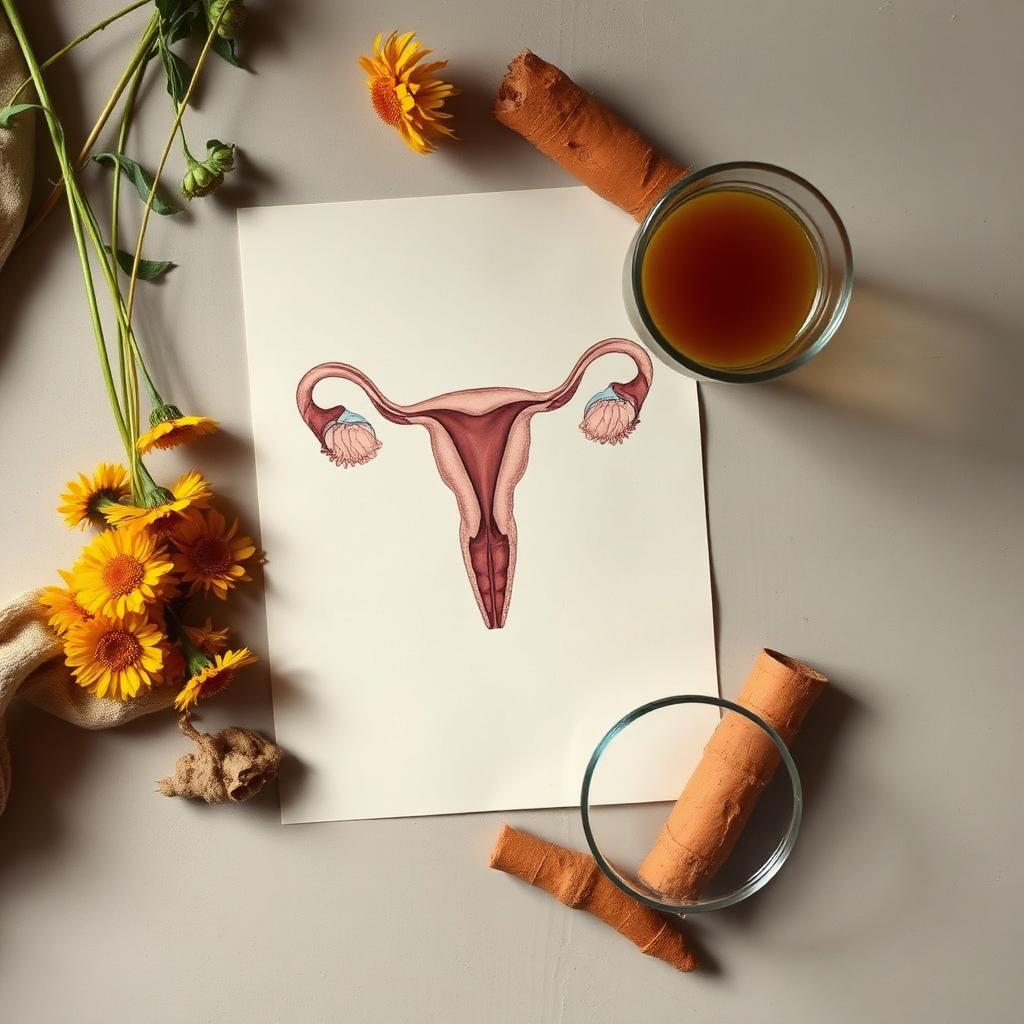
Endometriosis is the presence of endometrial-like tissue outside the uterus — on the ovaries, peritoneum, bowel, bladder, occasionally the diaphragm. These lesions are not exactly the same as uterine endometrium; they produce their own oestrogen via aromatase, they recruit nerve and blood supply, and they generate inflammatory cytokines and prostaglandins that cause pain far beyond the menstrual window (Bulun et al., Endocr Rev 2019).
It affects roughly 1 in 10 women of reproductive age — the same prevalence as type 2 diabetes — and yet the average time from first symptom to diagnosis in the UK is still 7.5 years (All-Party Parliamentary Group on Endometriosis report, 2020). This is a systemic failure, not a personal one.
What it isn't
It is not bad period pain. It is not in your head. It is not caused by retrograde menstruation alone — that theory is decades out of date and doesn't explain endometriosis in newborns or in men taking oestrogen. It is not cured by hysterectomy (lesions remain on other organs). It is not caused by oestrogen — but it is fuelled by it, which is why management focuses on supporting healthy oestrogen metabolism and clearance.
The immune component nobody mentions
Endometriosis is increasingly understood as an immune-dysregulation disorder as much as a hormonal one. Women with endometriosis show altered NK cell function, raised Th17 and Th2 activity, and a higher rate of co-existing autoimmune conditions including Hashimoto's, lupus and coeliac disease (Shigesi et al., Hum Reprod Update 2019). This is why managing systemic inflammation — diet, sleep, stress, gut health — affects symptoms so reliably.
The Lara Briden protocol I work from
Lara Briden's Period Repair Manual frames endo as 'an immune disease that affects the pelvis,' and the protocol reflects that. The core moves:
- Reduce inflammatory triggers: gluten trial (helpful in ~75% of women — Marziali et al., Minerva Chir 2012), dairy A1 protein trial, alcohol minimisation, ultra-processed seed-oil avoidance.
- Support oestrogen clearance: cruciferous vegetables daily for DIM and indole-3-carbinol; 30 g+ fibre/day; reduce xenoestrogen exposure (plastics, fragrance, conventional skincare).
- Support gut function and the oestrobolome — the gut bacteria that regulate oestrogen recirculation via β-glucuronidase (Kwa et al., J Natl Cancer Inst 2016).
- Targeted nutrients: zinc, magnesium glycinate, vitamin D to 100+ nmol/L, omega-3 EPA-DHA 2 g/day, NAC 1200 mg twice daily (has trial evidence for endometrioma reduction — Porpora et al., Evid Based Complement Alternat Med 2013).
- Address pelvic floor: 50% of women with endo have pelvic floor dysfunction that amplifies pain; a specialist physiotherapist is non-negotiable.
Conventional treatment, used wisely
Excision surgery by a specialist endometriosis centre (not ablation by a general gynaecologist) is the gold standard when surgery is indicated, with substantially better long-term outcomes (Pundir et al., J Minim Invasive Gynecol 2017). Hormonal suppression (combined pill, progestin-only methods, GnRH analogues) can buy symptom relief but does not treat the disease, and side-effect profiles vary widely. The decision is individual and deserves a clinician who explains the trade-offs honestly.
Pain management while you build the foundations
- NSAIDs — most effective when started 24 hours before bleeding rather than when pain has already escalated (prostaglandin synthesis is upstream).
- Heat — clinical trials show topical heat is equivalent to ibuprofen for primary dysmenorrhoea (Akin et al., J Reprod Med 2001).
- TENS — Cochrane-supported for dysmenorrhoea (Proctor et al., Cochrane Database Syst Rev 2002).
- Magnesium glycinate 300–400 mg nightly — reduces uterine cramping.
The mindset piece, because this is a long game
Endo is chronic. The goal isn't a cure — it's months and years that feel mostly normal, with flare protocols ready for the rest. The women I see do best when they stop treating each cycle as a referendum on whether the protocol is working, and start zooming out to 6- and 12-month patterns. The bad weeks don't mean the work isn't working.
You are not failing because the diet didn't fix it in a month. You're managing an immune-inflammatory pelvic condition, and you're doing it with adult tools. That's the work.
References
- Bulun SE et al. Endometriosis. Endocr Rev 2019;40(4):1048–1079.
- All-Party Parliamentary Group on Endometriosis. Endometriosis in the UK: time for change. APPG Report, 2020.
- Shigesi N et al. The association between endometriosis and autoimmune diseases: a systematic review and meta-analysis. Hum Reprod Update 2019;25(4):486–503.
- Marziali M et al. Gluten-free diet: a new strategy for management of painful endometriosis-related symptoms? Minerva Chir 2012;67(6):499–504.
- Kwa M et al. The intestinal microbiome and estrogen receptor-positive female cancers. J Natl Cancer Inst 2016;108(8):djw029.
- Porpora MG et al. A promise in the treatment of endometriosis: an observational cohort study on N-acetyl-cysteine. Evid Based Complement Alternat Med 2013;2013:240702.
- Pundir J et al. Laparoscopic excision versus ablation for endometriosis-associated pain: an updated systematic review and meta-analysis. J Minim Invasive Gynecol 2017;24(5):747–756.
- Akin MD et al. Continuous low-level topical heat in the treatment of dysmenorrhea. J Reprod Med 2001;46(8):739–745.
- Proctor M et al. Transcutaneous electrical nerve stimulation for primary dysmenorrhoea. Cochrane Database Syst Rev 2002;(1):CD002123.
- Briden L. Period Repair Manual: Natural Treatment for Better Hormones and Better Periods. 2nd ed. 2018.
The takeaway
Endometriosis is inflammatory, immune-mediated and oestrogen-fuelled. Reduce inflammation, support oestrogen clearance, fix the gut, get specialist surgical and pelvic floor input, and play the long game. The protocol works — just slower than the internet promises.
Monthly newsletter
Liked this? Get the monthly note.
One email a month with new research made readable, plus practical nutrition and habit notes from the Kitchen Table.