What I eat in a flare: an endometriosis-friendly day
A real 24-hour snapshot of anti-inflammatory eating, movement, and the non-negotiables that keep my symptoms manageable.
Written by Amy Morris, BSc (Hons) Nutritional Therapy — Functional Nutritional Therapist
A flare doesn't ask permission. One day everything feels manageable and the next your pelvis is on fire, your gut has staged a revolt and standing up is negotiable. Over a decade of living with endometriosis I've stopped trying to override flares and started feeding through them. This is what a real 24 hours looks like — not aspirational, just survivable — with the mechanisms underneath each choice.
Why food matters at all during a flare
Endometriosis is an oestrogen-driven inflammatory and immune-mediated condition. Lesions produce their own oestrogen via aromatase, generate prostaglandin E2, and recruit inflammatory cytokines (IL-6, TNF-α) that amplify pain (Bulun et al., Endocr Rev 2019). Anything that lowers systemic inflammation, supports oestrogen clearance through phase 1 and phase 2 liver detoxification, and calms the visceral nervous system will buy you measurable relief — not a cure, but a dial.
Diet won't dissolve a lesion. It can change how loudly that lesion talks.
On waking
- Warm water with lemon and a pinch of salt — bile flow + electrolytes for a sluggish gut.
- Magnesium glycinate 300–400 mg — reduces visceral muscle cramping; meta-analysis shows benefit in dysmenorrhoea (Parazzini et al., Magnes Res 2017).
- Omega-3 (EPA-DHA 2–3 g) — anti-inflammatory; trial evidence for reduced endometriosis-associated pain (Hopeman et al., Reprod Sci 2015).
Breakfast (slow, warm, fat-forward)
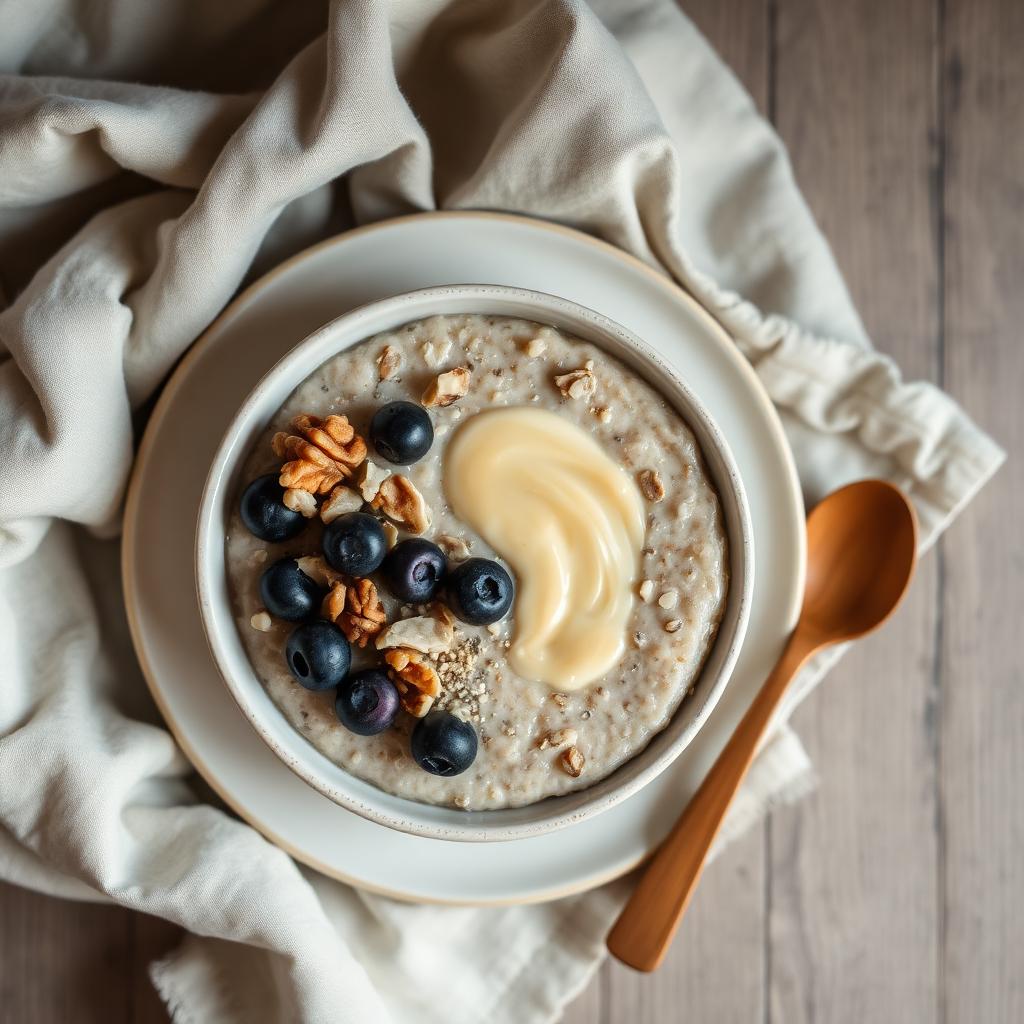
I avoid cold food on flare days — Traditional Chinese Medicine and modern gut research align on this: cold liquid in a stressed gut slows the migrating motor complex and worsens bloating (Camilleri, N Engl J Med 2014). A typical flare breakfast: two eggs scrambled in olive oil, half an avocado, sautéed spinach, sourdough if my gut is calm or skip the grain if not. Protein 25–30 g blunts the cortisol-driven sugar craving that turns up by 11 a.m.
Mid-morning
Herbal tea, not coffee. Caffeine is not the villain it's painted as for everyone with endo, but in a flare it spikes cortisol and aggravates pelvic floor tension. I switch to ginger, peppermint or chamomile. Ginger has trial-level evidence for reducing primary and secondary dysmenorrhoea on par with mefenamic acid (Ozgoli et al., J Altern Complement Med 2009).
Lunch — the anti-inflammatory plate
Build it: a palm of protein (wild salmon, sardines, organic chicken thigh), two cupped hands of cooked vegetables, half a fist of complex carbohydrate (sweet potato, quinoa, lentils), a thumb of fat (olive oil, tahini, avocado). The Mediterranean pattern is the most studied dietary approach for endometriosis and has been associated with reduced pain scores and inflammatory markers (Sesti et al., Reprod Biomed Online 2007; Halpern et al., Reprod Sci 2015).
I avoid gluten on flare days — not because it's universally inflammatory, but because around 75% of women with endo report symptom reduction on a gluten-free trial (Marziali et al., Minerva Chir 2012). Worth a personal trial; not dogma.
Afternoon — the unsexy bits that move the dial
- 20 minutes lying with legs up the wall — increases parasympathetic tone, reduces pelvic congestion.
- Hot water bottle on the lower abdomen — equivalent to ibuprofen for primary dysmenorrhoea in trial settings (Akin et al., J Reprod Med 2001).
- TENS unit on low setting — Cochrane review supports use for dysmenorrhoea (Proctor et al., Cochrane Database Syst Rev 2002).
Dinner — anti-inflammatory and oestrogen-clearing
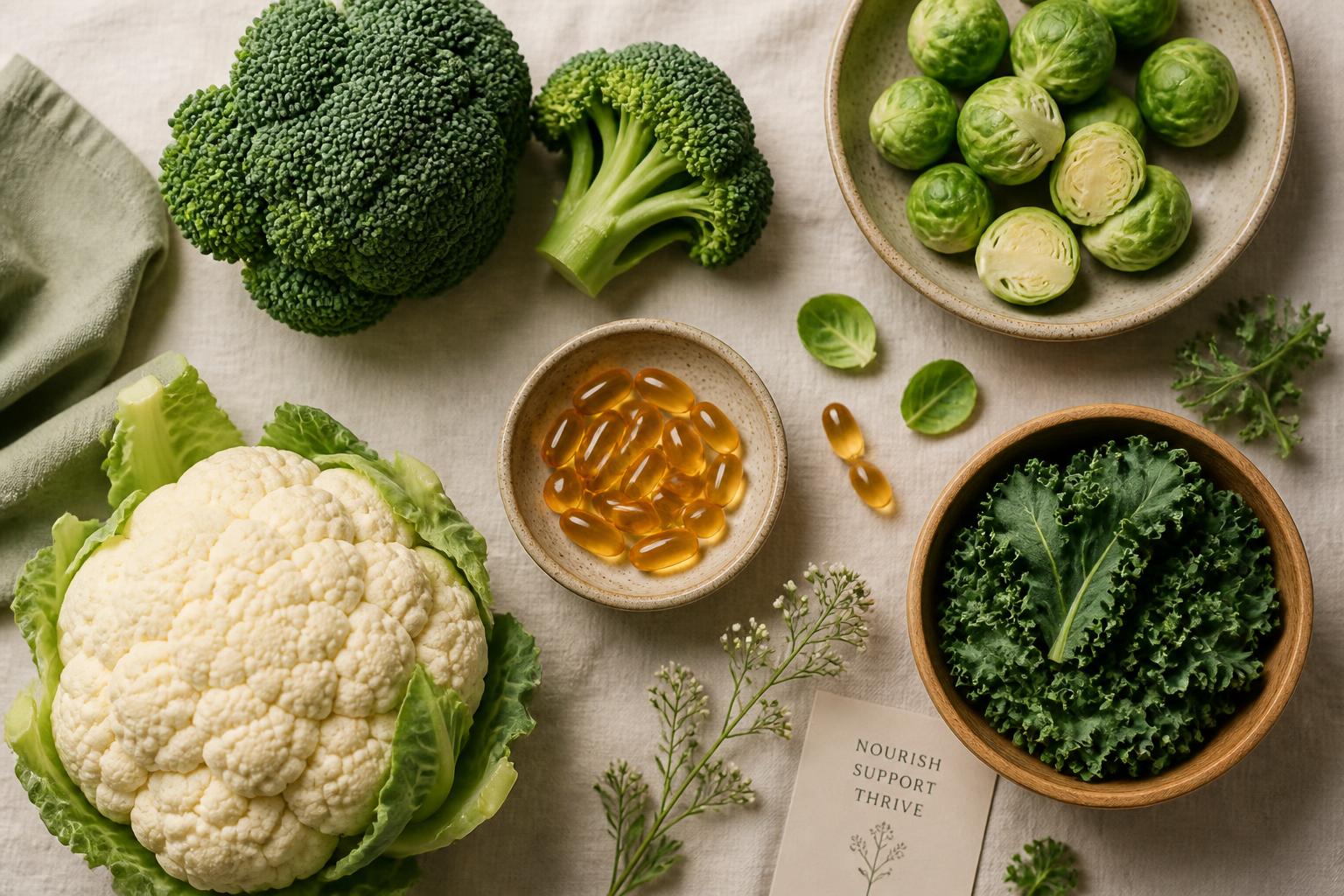
Cruciferous vegetables (broccoli, cauliflower, rocket, kale) deliver indole-3-carbinol and DIM, which support the 2-hydroxyoestrone pathway in phase 1 liver detoxification — the safer route for oestrogen metabolism (Bradlow et al., Steroids 1996). I'll add bitter greens for bile flow and a slow-cooked protein (lamb shank, beef stew) for iron, which menstruating endo bodies chronically lose.
Fibre target across the day: at least 30 g. Adequate fibre is the single most important dietary lever for oestrogen excretion via stool — without it, conjugated oestrogens get reactivated in the gut by β-glucuronidase and recirculated (Goldin et al., N Engl J Med 1982).
Evening
Castor oil pack over the lower abdomen for 30–45 minutes. Limited but consistent clinical observation supports its use for pelvic congestion and constipation; the warmth alone is therapeutic. CBD oil sublingual if pain is breaking through. Bed by 10 p.m. — deep sleep is when the immune system does its anti-inflammatory work, and one bad night measurably raises next-day pain perception (Smith et al., Sleep 2007).
A flare day is not a failed day. It's a day with different rules. The win is staying out of the inflammatory hole that takes a week to climb out of.
References
- Bulun SE et al. Endometriosis. Endocr Rev 2019;40(4):1048–1079.
- Parazzini F, Di Martino M, Pellegrino P. Magnesium in the gynecological practice: a literature review. Magnes Res 2017;30(1):1–7.
- Hopeman MM et al. Serum polyunsaturated fatty acids and endometriosis. Reprod Sci 2015;22(9):1083–1087.
- Camilleri M. Gastrointestinal motility. N Engl J Med 2014.
- Ozgoli G et al. Comparison of effects of ginger, mefenamic acid, and ibuprofen on pain in women with primary dysmenorrhea. J Altern Complement Med 2009;15(2):129–132.
- Sesti F et al. Recurrence rate of endometrioma after laparoscopic cystectomy: a comparative randomized trial between post-operative hormonal suppression and a dietary therapy. Reprod Biomed Online 2007;15(5):522–528.
- Halpern G et al. Nutritional supplements in the treatment of endometriosis: a review. Reprod Sci 2015.
- Marziali M et al. Gluten-free diet: a new strategy for management of painful endometriosis-related symptoms? Minerva Chir 2012;67(6):499–504.
- Akin MD et al. Continuous low-level topical heat in the treatment of dysmenorrhea. J Reprod Med 2001;46(8):739–745.
- Proctor M et al. Transcutaneous electrical nerve stimulation for primary dysmenorrhoea. Cochrane Database Syst Rev 2002;(1):CD002123.
- Bradlow HL et al. 2-hydroxyestrone: the 'good' estrogen. Steroids 1996;61(4):252–256.
- Goldin BR et al. Estrogen excretion patterns and plasma levels in vegetarian and omnivorous women. N Engl J Med 1982;307(25):1542–1547.
- Smith MT et al. The effects of sleep deprivation on pain inhibition and spontaneous pain. Sleep 2007;30(4):494–505.
The takeaway
Warm food, anti-inflammatory fats, cruciferous vegetables, magnesium, omega-3, sleep before 10 p.m. None of this is glamorous and all of it works, slowly, the more consistently you do it.
Monthly newsletter
Liked this? Get the monthly note.
One email a month with new research made readable, plus practical nutrition and habit notes from the Kitchen Table.