Choline in pregnancy: the quiet nutrient that builds your baby's brain
Most pregnant women know about folate. Far fewer have heard of choline — a nutrient central to foetal brain development that many women don't get enough of. What it does, how much you need, the best food sources and how to get there when nausea makes eating hard.
Written by Amy Morris, BSc (Hons) Nutritional Therapy — Functional Nutritional Therapist
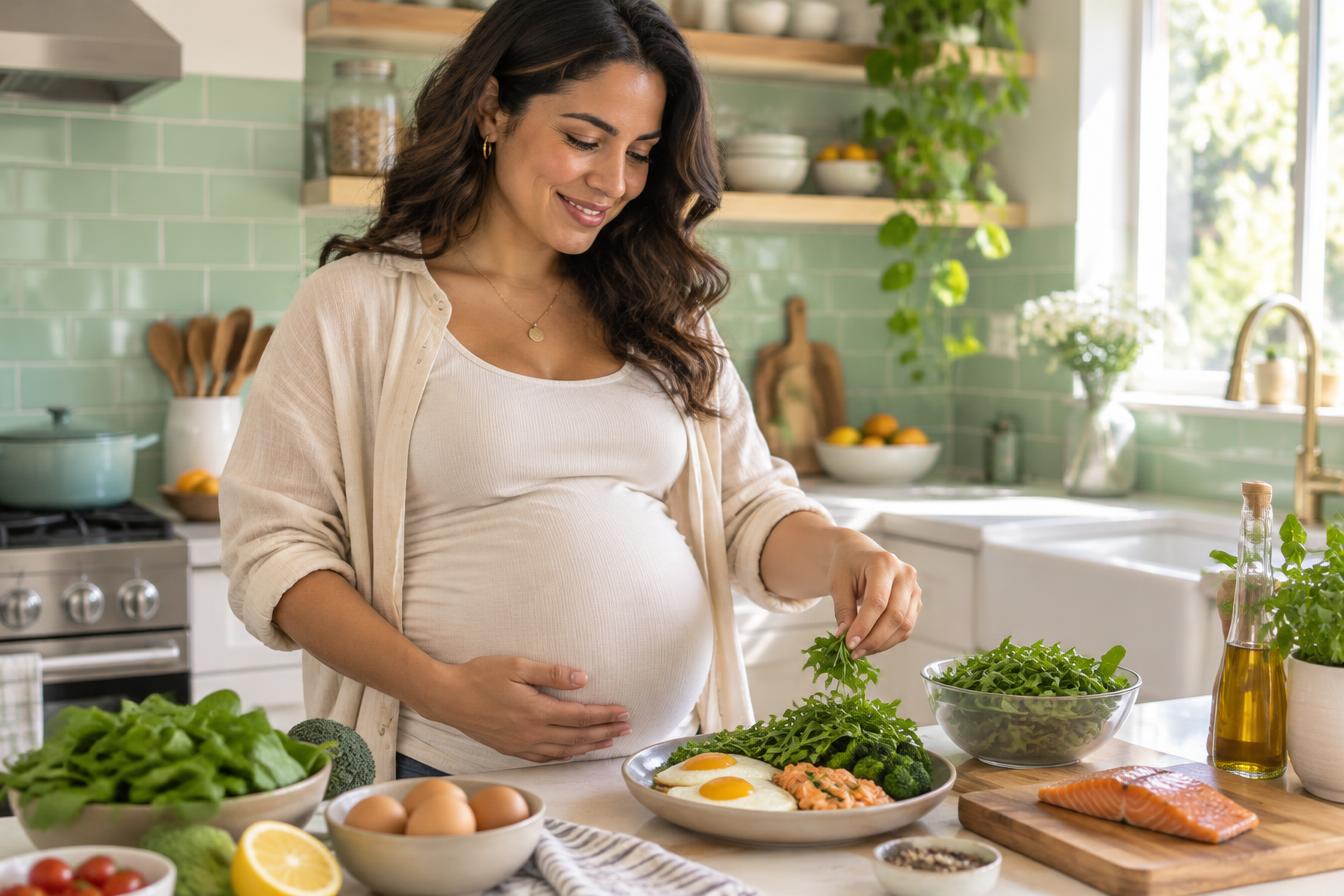
When women come to me in early pregnancy, they nearly always know about folic acid. Many know about vitamin D and iron. Almost none have heard of choline — and yet it is one of the nutrients most closely tied to how a baby's brain and spinal cord develop. It is also one that national survey data suggest the large majority of pregnant women don't reach on diet alone, and that many prenatal supplements contain little or none of. This isn't about panic or perfection. It is about a quiet nutrient that deserves a place in the conversation, and some very practical ways to get more of it — even on days when nausea means toast is the best you can manage.
What choline does
Choline is an essential nutrient: your body makes some, but not enough, so you need it from food. It is used to build cell membranes, it is the raw material for acetylcholine (a messenger involved in memory and muscle control), and it is a major source of methyl groups for the methylation cycle, which works closely with folate and vitamin B12 (Zeisel, 2006).
During pregnancy, demand rises sharply. Choline is actively transported to the baby, and it is needed for the rapid growth of brain tissue, particularly the hippocampus, the area involved in memory. Animal research has consistently shown that choline availability during pregnancy affects brain development and later memory in offspring (Zeisel, 2006). Human research is younger and smaller, but encouraging.
What the human evidence shows — and its limits
- Neural tube: in a case–control study, women with the lowest choline intakes around conception had a higher risk of a baby with a neural tube defect than those with the highest (Shaw et al., 2004). This is an association, not proof, and folate remains the key nutrient for neural tube prevention.
- Infant processing speed: in a small, well-controlled feeding trial, babies of women who consumed around 930 mg of choline a day in the third trimester showed faster information processing in infancy than those whose mothers consumed around 480 mg (Caudill et al., 2018). The trial had only a few dozen participants.
- Early brain markers: a trial giving choline supplements in pregnancy and early infancy found improved markers of early brain information processing in newborns (Ross et al., 2013).
The human trials are small, but they point the same way: choline matters for the developing brain, and many women are falling short of current targets.
How much you need, and how much women actually get
In the US, the adequate intake for choline in pregnancy is 450 mg a day, rising to 550 mg when breastfeeding. The European Food Safety Authority set a slightly higher figure of 480 mg in pregnancy and 520 mg while breastfeeding (EFSA, 2016). The UK doesn't currently set its own figure.
US national survey data suggest that the large majority of adults — and of pregnant women — fall below the adequate intake (Wallace et al., 2018). Intakes tend to be closely linked to how many eggs and animal proteins people eat (Wallace & Fulgoni, 2017), so women who eat mostly plant-based, or who are eating very little because of nausea, are more likely to fall short.
Your own needs can vary, too. Oestrogen boosts the body's own choline production, but common genetic variants can reduce that capacity, which may mean some women need more from food (Fischer et al., 2007). In 2017 the American Medical Association adopted a policy supporting adequate choline in prenatal vitamins. Many prenatal supplements still contain little or none, so it is worth checking your label.
The best food sources
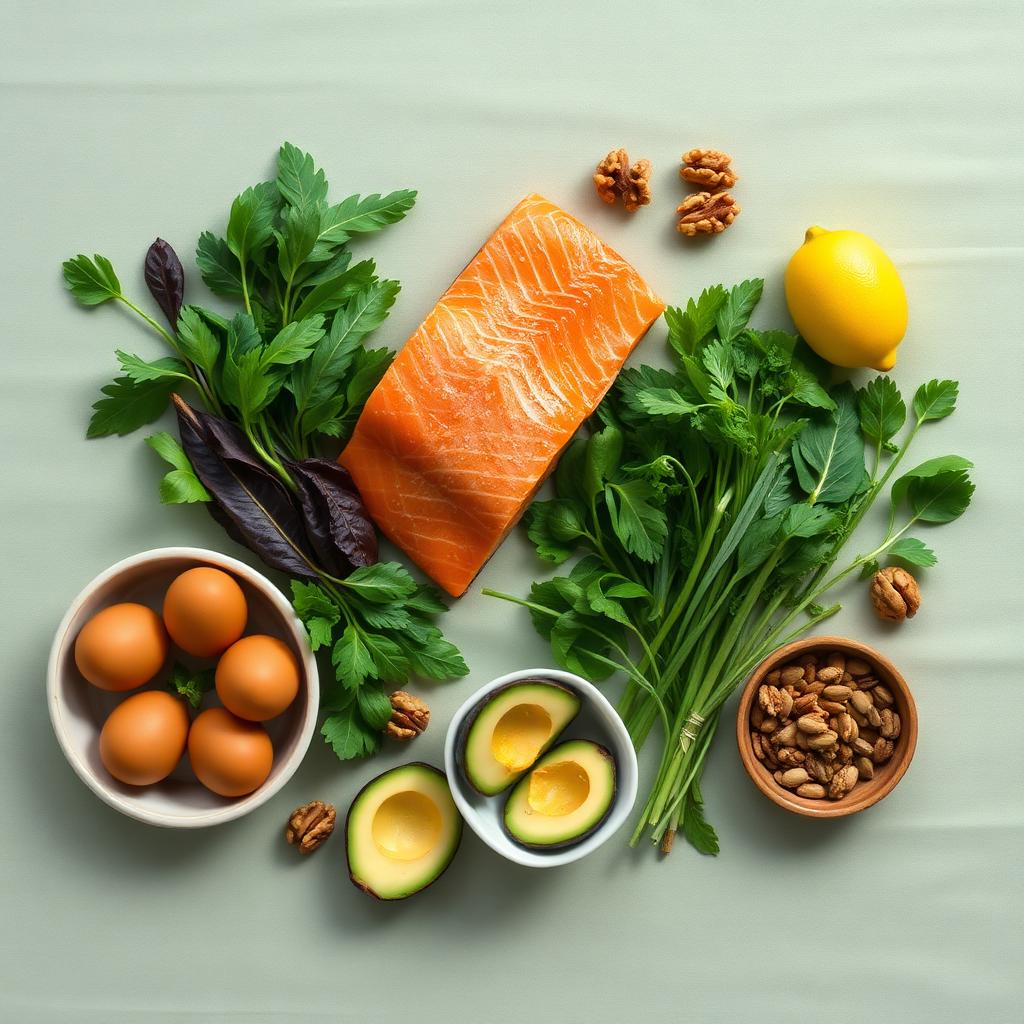
Choline is found mostly in animal foods, with some good plant sources. Approximate values are based on US food composition data and vary with portion and preparation.
- Eggs: one large egg contains roughly 150 mg, almost all of it in the yolk. Two eggs gets you about two-thirds of the way to the daily target. In pregnancy, eat them with fully cooked yolks, unless they carry the British Lion stamp in the UK, which are considered safe runny.
- Beef liver: one of the richest sources at roughly 350 mg per small cooked portion. But liver is also very high in vitamin A (retinol), and the NHS advises avoiding liver and liver products such as pâté in pregnancy because too much vitamin A can harm a developing baby. Advice differs between countries, so please speak to your midwife or doctor before eating it, and never combine it with supplements that contain retinol.
- Other organ meats such as heart and kidney are lower in vitamin A than liver but still worth discussing with your midwife before including them regularly.
- Salmon and other fish: a good source, alongside omega-3 fats that also support the baby's brain. The NHS advises no more than two portions of oily fish a week in pregnancy.
- Chicken, beef and pork: roughly 70–120 mg per palm-sized cooked portion, depending on the cut.
- Whey protein: a useful option for smoothies. Choose an unflavoured, minimally processed powder from grass-fed or organic dairy and check the label, as choline content varies between brands.
- Soybeans and edamame: among the best plant sources. Roasted soybeans provide roughly 100 mg per half cup; edamame provides less per portion but is easy to add.
- Smaller amounts: full-fat organic milk and yoghurt (or A2, sheep or goat alternatives), cruciferous vegetables such as broccoli and Brussels sprouts, quinoa, kidney beans and mushrooms.
When nausea makes eating hard
In the first trimester, 'eat more eggs' is easy to write and hard to do. These are the approaches that tend to help my clients:
- Eat little and often. An empty stomach often makes nausea worse, so keep simple snacks by the bed and in your bag.
- Try eggs in different forms: a cold, hard-boiled egg is often easier than a hot fried one, and egg can disappear into fritters, pancakes or fried rice.
- Cold foods often smell less, so salmon or chicken eaten cold, in a wrap or salad, may be more tolerable than a hot meal.
- Blend a smoothie with whey protein, frozen fruit and full-fat yoghurt or kefir, and sip it slowly.
- Keep a bag of frozen edamame for a quick, salty snack.
- On difficult days, aim for something rather than everything. Choline intake averaged over the week matters more than any single meal.
- If you are vomiting repeatedly, can't keep fluids down or are losing weight, contact your midwife or doctor. Severe sickness (hyperemesis gravidarum) needs medical care.
Should you supplement?
If you eat eggs and animal proteins most days, you may get close to the target from food. If you are vegetarian, vegan, eating very little, or simply don't like eggs, a supplement may be worth discussing. Choline is available as choline bitartrate, phosphatidylcholine and other forms, and some prenatal formulas now include it. Researchers who work in this area have argued that intakes above the current target may be beneficial, but that conclusion rests on small trials (Korsmo et al., 2019).
More isn't automatically better. Very high intakes — above the US upper limit of 3,500 mg a day — can cause a fishy body odour, sweating, gut upset and low blood pressure. Food sources plus a modest supplement, if you need one, is the sensible middle ground. Choline also works alongside folate, B12 and omega-3 fats, so I look at the whole prenatal picture rather than one nutrient in isolation.
Before you act on any of this
This article is for education and general information only. It isn't medical advice, it can't diagnose or treat any condition, and it doesn't replace a consultation with your own doctor or a qualified practitioner who knows your history. Please don't start, stop or change any medication, hormone or supplement because of something you've read here — take your questions to the person responsible for your care.
Pregnancy nutrition advice differs between countries and depends on your own health. Please check any changes to your diet or supplements with your midwife, obstetrician or GP.
References
- Caudill, M.A., Strupp, B.J., Muscalu, L., Nevins, J.E.H., & Canfield, R.L. (2018). Maternal choline supplementation during the third trimester of pregnancy improves infant information processing speed: a randomized, double-blind, controlled feeding study. FASEB Journal, 32(4), 2172–2180.
- EFSA Panel on Dietetic Products, Nutrition and Allergies. (2016). Dietary reference values for choline. EFSA Journal, 14(8), 4484.
- Fischer, L.M., daCosta, K.A., Kwock, L., et al. (2007). Sex and menopausal status influence human dietary requirements for the nutrient choline. American Journal of Clinical Nutrition, 85(5), 1275–1285.
- Korsmo, H.W., Jiang, X., & Caudill, M.A. (2019). Choline: exploring the growing science on its benefits for moms and babies. Nutrients, 11(8), 1823.
- NHS. Foods to avoid in pregnancy. nhs.uk.
- Ross, R.G., Hunter, S.K., McCarthy, L., et al. (2013). Perinatal choline effects on neonatal pathophysiology related to later schizophrenia risk. American Journal of Psychiatry, 170(3), 290–298.
- Shaw, G.M., Carmichael, S.L., Yang, W., Selvin, S., & Schaffer, D.M. (2004). Periconceptional dietary intake of choline and betaine and neural tube defects in offspring. American Journal of Epidemiology, 160(2), 102–109.
- Wallace, T.C., Blusztajn, J.K., Caudill, M.A., et al. (2018). Choline: the underconsumed and underappreciated essential nutrient. Nutrition Today, 53(6), 240–253.
- Wallace, T.C., & Fulgoni, V.L. (2017). Usual choline intakes are associated with egg and protein food consumption in the United States. Nutrients, 9(8), 839.
- Zeisel, S.H. (2006). The fetal origins of memory: the role of dietary choline in optimal brain development. Journal of Pediatrics, 149(5 Suppl), S131–S136.
The takeaway
Choline is an essential nutrient for building cell membranes, making acetylcholine and supporting methylation, and demand rises sharply in pregnancy as the baby's brain develops. Small human trials suggest higher intakes may support infant brain function, and survey data suggest most pregnant women fall below the 450–480 mg daily target. Egg yolks are the easiest source, alongside salmon, chicken, beef, pork, whey protein, soybeans and edamame. Liver is very rich in choline but also in vitamin A, so the NHS advises avoiding it in pregnancy — check with your midwife. When nausea strikes, eat little and often, try cold foods and smoothies, and aim for a good weekly average rather than a perfect day. Check your prenatal label, and discuss a modest supplement with your practitioner if food isn't getting you there.
Monthly newsletter
Liked this? Get the monthly note.
One email a month with new research made readable, plus practical nutrition and habit notes from the Kitchen Table.