Your kitchen layout is doing more of the work than your willpower: choice architecture at home
Why the fruit bowl beats the to-do list — and the small environment shifts that quietly change what you eat all week.
Written by Amy Morris, BSc (Hons) Nutritional Therapy — Functional Nutritional Therapist
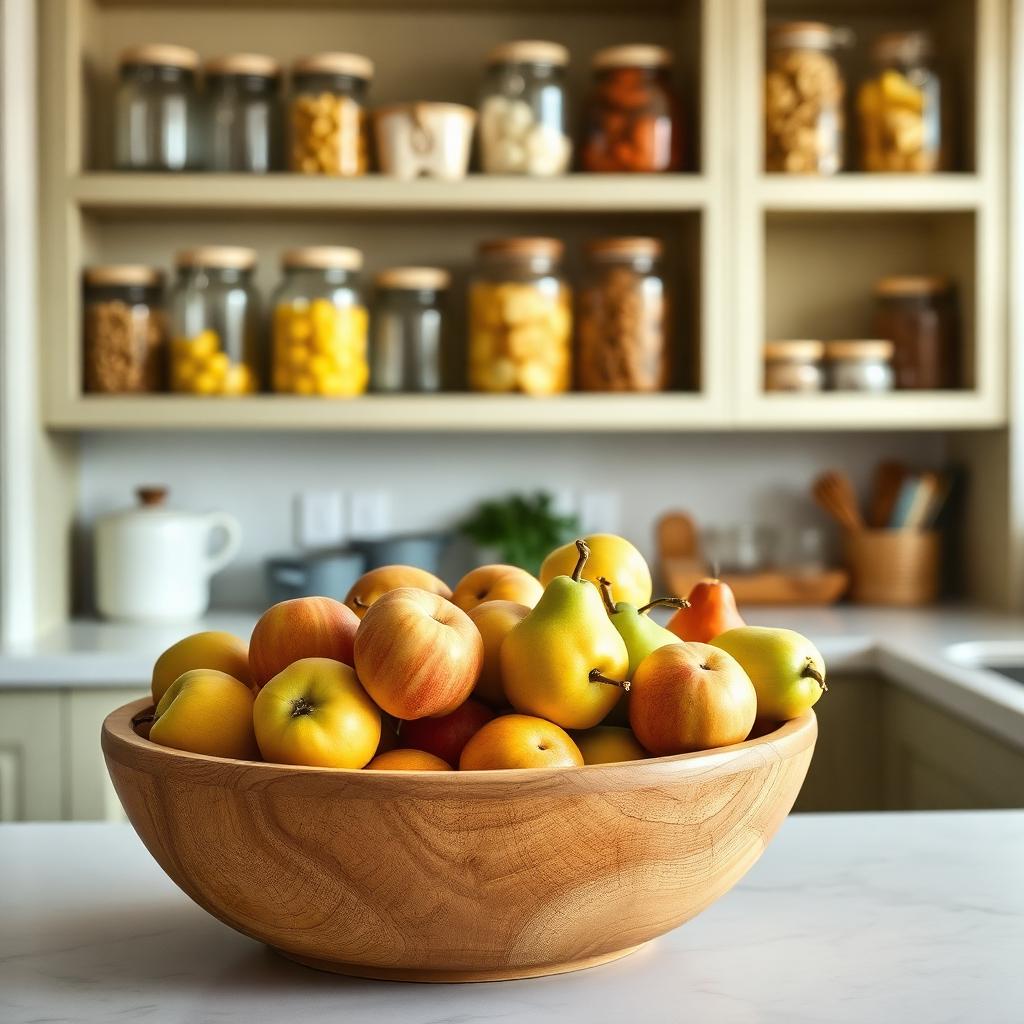
If you want to know what someone will eat tomorrow, don't ask them. Look at their kitchen. The way food is stored, displayed and laid out predicts intake more reliably than goals, plans or knowledge — because most eating decisions are made on autopilot, and autopilot follows whatever is easiest, most visible, and within arm's reach.
The research: visibility predicts intake
Brian Wansink's lab at Cornell ran some of the cleanest field studies in this space before its closure. One of the most replicated findings: women whose kitchen counters had visible breakfast cereal weighed on average 9.4 kg more than women whose counters had no visible cereal; visible fruit was associated with lower weight (Wansink et al., Health Education & Behavior, 2016). The principle has held up in subsequent independent work: what you see, you eat. What you have to look for, you mostly don't.
This is choice architecture — a term from behavioural economist Richard Thaler. The arrangement of the environment is itself a choice, made by you, in advance, on behalf of your future tired self.
Make the healthy choice the lazy choice
The whole game is friction. Add friction to the foods you want to eat less of. Remove friction from the foods you want to eat more of. Willpower is the most expensive currency you have; choice architecture lets you spend almost none of it.
- Fruit bowl on the counter, biscuit tin in a high cupboard. Visibility flipped.
- Pre-washed leaves in a clear container at eye level in the fridge. Cucumber and pepper sticks already cut. The 'salad' that takes 30 seconds gets eaten; the one that takes 8 minutes doesn't.
- Water jug on the desk. Glass already filled. The bottle in the bag for the school run, pre-filled the night before.
- Protein options at the front of the fridge — Greek yoghurt, boiled eggs, leftover roast chicken — at eye level, in clear containers.
- Treats kept, but kept in single-portion sizes and out of direct sightline. Not banned, just not background.
The kitchen counter is prime real estate
Most kitchens use their best surface for whatever happens to land there. Treat it instead as the most expensive billboard in the house. Whatever lives on the counter is what you'll eat most of. That single insight, applied for a fortnight, changes intake more than most meal plans.
If you do nothing else: move the fruit bowl forward and the biscuits up. Two minutes of work, lasting effect.
Pantry and fridge architecture
- Eye-level shelves get eaten first. Put the things you want defaulted to at eye level — yoghurt, eggs, hummus, vegetables. Put the rest higher or lower.
- Clear containers for things you want eaten, opaque for things you want forgotten. Visibility is the lever.
- Pre-portion the snacks you don't want to graze on. A family bag of crisps doesn't get eaten in one portion; six small bags don't either.
- Front-of-fridge vs. back-of-fridge: front gets eaten in 48 hours. Move things accordingly.
The decision is made when you shop, not when you eat
Choice architecture starts at the supermarket. Anything that makes it into the trolley will eventually make it into someone's mouth — usually yours, usually at 9 p.m. The single most effective intervention for most households is not 'eat less of X', it's 'don't buy X most weeks'. Decisions made once a week, in a fresh state, with a written list, are cheaper than decisions made nightly in a tired one.
The honest caveat
Choice architecture in your own kitchen only works if you live alone or with people on broadly the same page. If you share a kitchen with children, partners or housemates who eat differently, you'll need to negotiate zones — a 'mine' shelf in the fridge, a personal snack drawer — rather than apply a single scheme to the whole space. The principle still holds; the geography just shrinks.
References
- Wansink B, Hanks AS, Kaipainen K. Slim by design: kitchen counter correlates of obesity. Health Educ Behav 2016;43(5):552–558.
- Thaler RH, Sunstein CR. Nudge: Improving Decisions About Health, Wealth, and Happiness. Yale University Press, 2008.
- Hollands GJ et al. Altering choice architecture to change population health behaviour. Lancet Public Health 2017;2(8):e359–e371.
- Sobal J, Wansink B. Kitchenscapes, tablescapes, platescapes, and foodscapes. Environ Behav 2007;39(1):124–142.
The takeaway
Stop relying on willpower in a kitchen that's set up against you. Move the fruit forward, the biscuits up, pre-wash the leaves, and decide the week at the supermarket. The environment does the rest.
Monthly newsletter
Liked this? Get the monthly note.
One email a month with new research made readable, plus practical nutrition and habit notes from the Kitchen Table.